Understanding 'Can' and 'Can't': Ability and Permission in English
This resource explores the usages of "can" and "can't" in English, focusing on expressing ability and permission. Learn how to articulate what you can or cannot do, such as running, swimming, or speaking a language. We also cover permission-related examples, including watching television after homework and driving a car without a license. Additionally, discover how to use "do you have to?" to inquire about obligations like completing homework and following rules like stopping at a red light or brushing your teeth.

Understanding 'Can' and 'Can't': Ability and Permission in English
E N D
Presentation Transcript
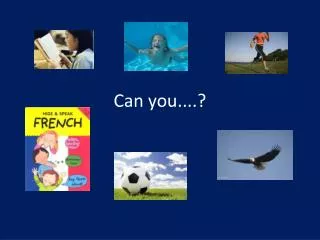
Can/ can’t have be used for... Ability • I can run, I can swim, I can’t speak French Permission • I can watch television after finishing my homework • You can’t drive my car! You don’t have a license.
Do you have to....? • Do homework • Go shopping for clothes • Stop at a red light • Brush your teeth