Fascinating Facts About Rattlesnakes: Nature's Intriguing Serpents
Rattlesnakes are unique reptiles known for their cross diamond patterns, which help them camouflage in their hot and dry desert habitats across North and South America. These carnivorous snakes can live up to 30 years and possess venom in their fangs to subdue prey like rodents and small birds. When threatened, they coil and rattle their tails as a warning. Rattlesnakes give birth to 3 to 20 young and can even go weeks without food. Discover more about their behavior, habitat, and fascinating fun facts!


Fascinating Facts About Rattlesnakes: Nature's Intriguing Serpents
E N D
Presentation Transcript
Rattlesnakes By Bridget Cobb
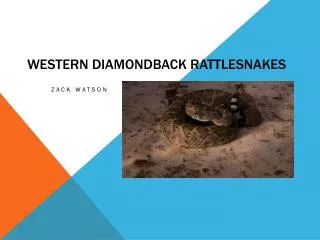
Physical Features Rattlesnakes have cross diamond patterns on their back. They use this to blend in. They also have rattles on their tails. That is why they are called rattlesnakes.
Lifespan A fully grown rattlesnake can live up to 30 years! WOW!
Habitat Rattlesnakes live in hot and dry deserts. They can only be found in North America and South America.
Food Rattlesnakes are carnivores and eat rodents, small birds, lizards, and frogs. As long as the prey’s body temperature is warmer than its surroundings, a snake cansense it, even in total darkness!
Prey Rattlesnakes are prey to Roadrunners. The Roadrunner hops around the snake, forcing it to strike until it is too tired. Then the Roadrunner kills it with its long, sharp beak.
Behavior When threatened, a rattlesnake quickly coils up, head raised, tail rattling. From its coiled position, a rattlesnake can lunge the front third of its body forward with great force!
Babies Rattlesnakes give birth to between 3 and 20 baby rattlesnakes.
Venom Rattlesnakes have poison in their fangs called venom. They use it to kill their prey.
4 Cool Fun Facts 1. Rattlesnakes have tips that break through skin. 2. Rattlesnakes can swim. 3. Rattlesnakes can go weeks without food. 4. You cannot tell a rattlesnake’s age by counting the segments on a rattlesnake’s tail. This is because segments will break off and rattlesnakes will grow more segments.
Scientific Name The scientific name for Rattlesnakes is Squamata.