Keying Method in Fletch67: Defensive Strategies Explained
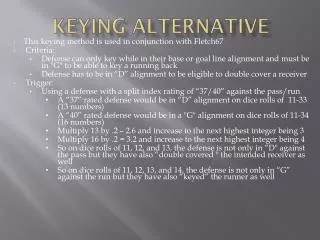
The keying method in Fletch67 outlines strategic defense alignments based on splitting index ratings for effective gameplay. Defenses can only key a running back while aligned in "G" position, and must be in "D" position to double-cover receivers. Using a split index rating of "37/40," different dice rolls determine alignment. For a "37" rated defense, specific rolls result in double coverage against the pass, while "40" rated defenses react similarly against runs. This method enhances the complexity of defensive plays in the strategy game.

Keying Method in Fletch67: Defensive Strategies Explained
E N D
Presentation Transcript
keying alternative This keying method is used in conjunction with Fletch67 Criteria: Defense can only key while in their base or goal line alignment and must be in "G" to be able to key a running back Defense has to be in “D” alignment to be eligible to double cover a receiver Trigger: Using a defense with a split index rating of “37/40” against the pass/run A “37” rated defense would be in “D” alignment on dice rolls of 11-33 (13 numbers) A “40” rated defense would be in a "G" alignment on dice rolls of 11-34 (16 numbers) Multiply 13 by .2 – 2.6 and increase to the next highest integer being 3 Multiply 16 by .2 = 3.2 and increase to the next highest integer being 4 So on dice rolls of 11, 12, and 13, the defense is not only in “D" against the pass but they have also “double covered " the intended receiver as well So on dice rolls of 11, 12, 13, and 14, the defense is not only in “G” against the run but they have also “keyed” the runner as well