
Understanding Keratitis: Types, Causes, and Management
E N D
Presentation Transcript
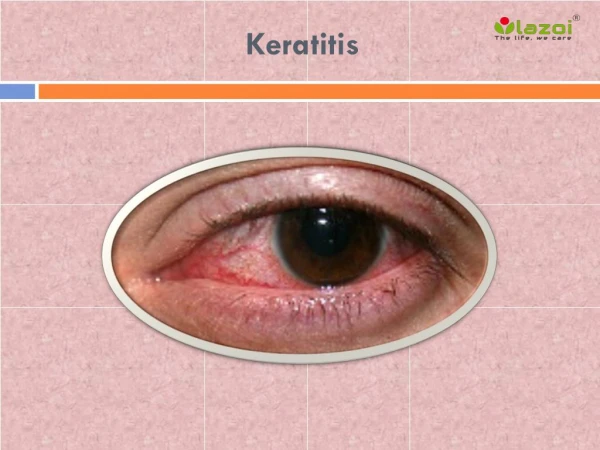
Keratitis • Inflammation of cornea characterized by moderate to intense pain and impaired vision
Types • Superficial keratitis – involves the superficial layers of the cornea and not generally leave a scar • Deep keratitis – deeper layers of the cornea (bowman’s membrane and other deep layers) and leave a scar that impairs vision
Causes Based on pathogens Amoebic keratitis – • Usually affecting contact lens wearers • Caused by acanthamoeba (acanthamoebakeratitis)
Bacterial keratitis– staphylococcus aureus, pseudomonas aeruginosa • Fungal keratitis– aspergillus Viral keratitis- HSV • Dendritickeratitis or herpes simplex keratitis – usually leaves a dendritic ulcer • Herpes zoster keratitis – herpes zoster virus
Exposure keratitis– due to dryness of the cornea caused by incomplete or inadequate eyelid closure (in exophthalmos or masses inside the globe) • Photokeratitis – keratitis due to intense ultraviolet radiation exposure
Signs and symptoms • Pain • Tearing • Redness and blurring of vision • The pain may be mild to severe, depending on the cause and extent of the inflammation • Sensitivity to light may also be present
Management Antibacterial therapy • Topical antibiotics, subconjunctival antibiotic injection or in severe cases – IV antibiotics • Sub conjunctival injection – 25 G needle and 2 ml syringe.
Antiviral therapy – topical acyclovir • analgesics for pain • Corticosteroids to reduce inflammation Antifungal therapy • Natamycin– antifungal eye drop is the only treatment for acanthamoebakeratitis. Because all other drugs are resistant to acanthamoeba • If that treatment fails – keratoplasty
Nursing management for eye inflammations and infections Assessment -Assess ocular changes – • Edema • Redness • Decreasing visual acuity, • Feeling of foreign body • Discomforts
Nursing diagnosis • Acute pain related to irritation or infection of the eye • Anxiety related to outcome of treatment • Disturbed sensory perception (visual) related to diminished vision • Knowledge deficit
Interventions Health promotion • Aseptic technique • Frequent thorough hand washing – to avoid spreading • Dispose contaminated dressings • If the patient is having any STD’s, they are more risky
Apply warm or cool compresses if indicated • Darkening the room and providing appropriate analgesic – comfort measures • If the patient receives one or more eye drops – proper spacing should be given in between dosages – help and promote maximum absorption
Teach family regarding the safety measures and medication techniques • Do not share eye cosmetics • Do not share contact lens • Clean the contact lens properly and store it in a closed container.