Download
1 / 3
0 likes | 1 Vues
Choosing the right Internet cable is essential for reliable connectivity, faster speeds, and stable performance. Whether you're setting up a home network, upgrading office infrastructure, or working with Cable TV & Broadband installations, understanding different cable types helps you make the right decision.

E N D
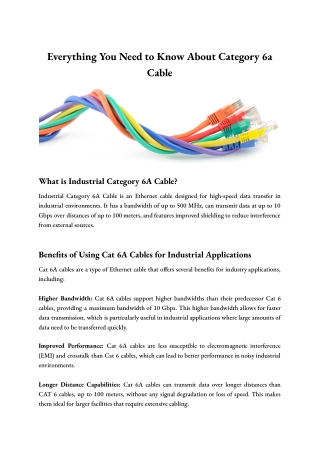
Everything You Need to Know About Internet Cable Types Keyword - Cable TV & Broadband URL - https://cablemall.in/collections/cable-tv-broadband Choosing the right Internet cable is essential for reliable connectivity, faster speeds, and stable performance. Whether you're setting up a home network, upgrading office infrastructure, or working with Cable TV & Broadband installations, understanding different cable types helps you make the right decision. In today’s digital world, Internet cable quality directly affects streaming, gaming, browsing, and business operations. Let’s break down the most common cable types used for internet and broadband connections. What Are Internet Cables? Internet cables are physical transmission media that carry data signals between devices and networks. They connect routers, modems, switches, and other networking equipment to ensure smooth communication. Different cable types are designed for different speeds, distances, and environments. Using the correct cable improves performance and reduces signal loss. 1. Twisted Pair Cables (Ethernet Cables) Twisted pair cables are the most widely used Internet cable option for homes and offices. They contain pairs of copper wires twisted together to reduce interference. Common Categories: •Cat5e – Supports speeds up to 1 Gbps. Suitable for standard home broadband. •Cat6 – Faster and more reliable, supports up to 10 Gbps over shorter distances. •Cat6a – Enhanced version of Cat6 with better shielding and reduced crosstalk. •Cat7 / Cat8 – Used for high-performance networks and data centers. These cable types are ideal for connecting routers, computers, gaming consoles, and smart TVs.
2. Coaxial Cables Coaxial cables are commonly used in Cable TV & Broadband connections. They consist of a central copper conductor surrounded by insulation and shielding to prevent signal interference. They are widely used by internet service providers for cable modem connections. Coaxial cables are durable and suitable for transmitting high-frequency signals over longer distances. Advantages include: •Strong signal stability •Resistance to electrical interference •Ideal for cable television and broadband networks 3. Fiber Optic Cables Fiber optic cables are the fastest and most advanced Internet cable type available today. Instead of copper wires, they use light signals transmitted through glass or plastic fibers. Benefits of fiber optic cables: •Extremely high-speed data transfer •Minimal signal loss over long distances •High bandwidth capacity •Ideal for enterprise networks and high-speed broadband Fiber is increasingly used in modern Cable TV & Broadband infrastructure, especially in urban areas. 4. Shielded vs Unshielded Cables Another important factor in cable types is shielding. Unshielded Twisted Pair (UTP) cables are common for home use. They are flexible and affordable but may be affected by interference in high-electrical environments. Shielded cables (STP/FTP) include extra protective layers to block electromagnetic interference. These are suitable for industrial setups or areas with heavy machinery. Choosing the Right Internet Cable When selecting an Internet cable, consider: •Speed requirements: Higher categories like Cat6 or fiber support faster speeds.
•Distance: Fiber works best for long distances, while Ethernet is suitable for shorter runs. •Environment: Shielded cables are better in interference-prone areas. •Application: Homes, offices, and data centers have different needs. For Cable TV & Broadband installations, coaxial and fiber cables are commonly used, while Ethernet cables connect devices within the network. Why Cable Quality Matters Poor-quality cables can cause slow speeds, dropped connections, and signal loss. Investing in high-quality Internet cable ensures stable performance and longer lifespan. Reliable cables also reduce maintenance costs and improve user experience for streaming, video calls, and online gaming. Final Thoughts Understanding different cable types helps you build a faster and more reliable network. From twisted pair Ethernet cables to advanced fiber optic solutions, each Internet cable serves a specific purpose. Whether you’re upgrading a home setup or working on Cable TV & Broadband projects, choosing the right cable ensures better performance, fewer interruptions, and future-ready connectivity. Explore professional-grade networking solutions at CableMall to find the best cables for your needs.