
Character Chiasmus in "As I Lay Dying": The Transformation of the Bundren Family
In William Faulkner's "As I Lay Dying," the Bundren family’s narrative arc exemplifies character chiasmus, showcasing the shift of personality and motivation among the siblings. Initially, Darl Bundren’s perspective dominates our understanding of the family's journey. However, as Darl descends into madness, other characters, notably Jewel, emerge to provide new insight and clarity about the unfolding events. This transformation not only shapes the readers' interpretation but also enriches the story's depth. Through textual evidence, the complexities of the Bundren siblings reveal the intricacies of their shared experience and individual struggles.

Character Chiasmus in "As I Lay Dying": The Transformation of the Bundren Family
E N D
Presentation Transcript
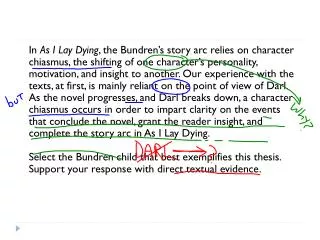
In As I Lay Dying, the Bundren’sstory arc relies on character chiasmus, the shifting of one character’s personality, motivation, and insight to another. Our experience with the texts, at first, is mainly reliant on the point of view of Darl. As the novel progresses, and Darl breaks down, a character chiasmus occurs in order to impart clarity on the events that conclude the novel, grant the reader insight, and complete the story arc in As I Lay Dying. Select the Bundren child that best exemplifies this thesis. Support your response with direct textual evidence.