William Shakespeare
William Shakespeare remains a pivotal figure in literature due to his universal themes, timeless insights, and beautiful language. His plays and sonnets explore deep human emotions, moral dilemmas, and the complexities of love and ambition. Through works like "Sonnet 18" and "Macbeth," Shakespeare delves into the nuances of life, death, and the human condition, revealing truths that resonate across ages. His adaptability allows for reinterpretation, ensuring his relevance in a contemporary context, while his lyrical style enchants readers and audiences alike.

William Shakespeare
E N D
Presentation Transcript
William Shakespeare Unit 3B
Why Shakespeare is Great • Greatest • 2. Universality • Timelessness • Beauty • Adaptability • Age, time
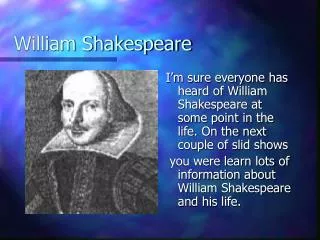
About Shakespeare’s Life • 154 • Birthplace • Education • Hathaway • Playwright • - 154 • - plays • Christian
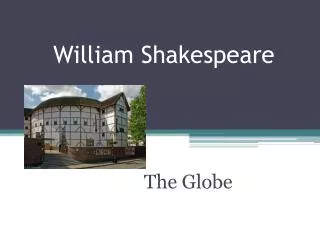
His Career • King’s, Globe • Money • - mature • - complex • - dialogue
His Philosophy • What, content • How, style • - functional • - explicit • - moral tone • Theme, purpose • Realism, lovely, respect
Random Facts • Performed • Longest • all honorificabilitudinitatibus
Sonnets • Autobiographical, sequences • - fatherly • - faults • - Cupid
“Sonnet 18” • Best • Man differ, death • Sun, sun going behind the clouds • The sonnet • Life • Yes, Shakespeare’s sonnet lives, and it does give life to the subject. • English, 3 quatrains and a couplet • Italian • - But
“Sonnet 73” • Paradox • Autumn • children
“Sonnet 116” • Love, time • Argument • - 18 • Faithful • Faithfulness and endurance—True love accepts without seeking to change the other person. Time and circumstances do not change true love. • Grim Reaper
“Sonnet 146” • Lady • Death, beauty, inner • Apostrophe • Priorities • The body • Religious • Italian • Slave, inversely • More, eternal • Buildings • Death • Paradox, physical, fear
Terms • Opposition • Truth • “To Be or Not to Be” • Real • Dressing • Universal • Tragic flaw
General Information about the Play • Tragedies • Banquo • Scotland • Destiny, soul, monster, fall • Tragedy, triumphs, Biblical
Act I, scene i • Tone, pathetic • - weird, fate • - fates • - not, same, Scripture, not • - conflict, chorus • + reversal • + paradox • + order • + reality
Act I, scene ii • Begins, order • King • Hest • Loyal • ** villain • blood
Act I, scene iii • Ironic, victorious, stormy, Macbeth • King • - prophecies • Banquo • - paradox • - foils • Fulfilled, obsessed • Truths, opposite • intentions
Act I, scene iv • Execution • Irony • Repented, soul, escape
Act I, scene v • Letter, kill • Guiding • Feminine, order • Soliloquy, evil, willingly, no, innocent, evil • Memorable • - antithesis • - ambition, flaw • - Great Chain, Being • - Eve, Jezebel • - After • - Before • builds
Act I, scene vi • Castle • Mood • Birds • Ironic • - horror
Act I, scene vii • Consequences, death • Guest • Crossbow, arrow • Ambition, regicide
Act II, Scene i • Evil • Good • -honor • -conscience • -loyalty • Dagger • Evil, off, bloody, evil • Reality, literal, abstract • Bell, hell • Conflicted, sees the horror of the deed which he is planning
Act II, scene ii • The groom’s snoring, Macbeth’s descent on the stairs, the owl’s scream, the cricket’s cry, the knocking within • Father • Kills • “amen,” hell, mad • Sleep, innocence • Knocking, horror • Pilate, irony • Lady Macbeth • Lady Macbeth- calm, Macbeth- horrified
Act II, scene iii • Evils, prose, Language • Upset • Macduff, dawn • Temple, holy • Servants • afraid
Act II, scene iv • Falcon, owl • Pathetic fallacy • Order • Macbeth
Act III, scene i • King • Fulfilled • Banquo’s, Fleance’s • Banquo, Fleance • Malcolm, Donalbain • Irony • Feelings of jealousy because he has no male heirs, and he is afraid that Banquo’s son Fleance will succeed him as king according to the witches’ prophecy
Act III, scene ii • Bolder, despair • Futile, protectiveness, true • Sleep, Duncan’s • Night, darkness • Hide, wife’s, life, death
Act III, scene iii • Macbeth’s, Banquo, Fleance • Third, Macbeth • Banquo, Fleance, turns, children, failure • Turning point, conscience, crown • Death • death, order
Act III, scene iv • Banquet, ensnare, reverse, ghost, avenge, ghost • Banquo’s, Fleance’s • Blood • Banquo, irony, returns, irony, theme • Fit, dismiss, order, symbolic • Supernatural, downfall • Banquo’s, Hecate • Supernatural, foreboding • Nature, crimes • Banquo’s, Duncan, Banquo, Banquo, ambition, bloodshed • Banquo, villain, James I • seek
Act III, scene v • Thunder, lightning • Pathetic fallacy • Hecate, Greek • Rhyme • Foreshadows, security
Act III, scene vi • Objective, ironic • Ironic, Duncan • After, killed, killing, Macduff • ideal Vs.