The Fascinating Desert Red Bat: Habitat, Diet, and Unique Survival Strategies
The desert red bat, found in North America, thrives in forests, caves, and openings. This small bat measures about 11 cm in length and weighs around 11 grams. It features distinctive red-orange fur and utilizes echolocation to hunt prey such as crickets, flies, and beetles. With a unique reproductive strategy, females can give birth to up to five babies at once. Despite facing threats from predators like hawks and owls, the desert red bat adapts to its environment, even dropping its body temperature to survive harsh conditions.

The Fascinating Desert Red Bat: Habitat, Diet, and Unique Survival Strategies
E N D
Presentation Transcript
Habitat: • The desert red bat has been found in North America. The desert red bat inhabits in forests, caves and holes.
Enemies: • The desert bat’s enemies are white tailed hawks, blue jays, and cruel owls
Babies: • born way up in the USA like Texas. It has 1 The desert red bat babies are -5 babies which can be triplets and twins
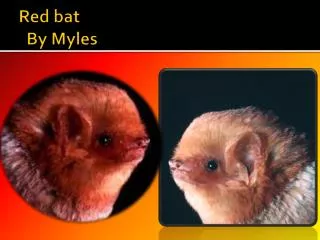
Physical Description: • The desert red bat’s length is equal to 11 cm and the ears are 1-1.5 cm. long. The desert red bat weighs 11 grams when they are adults. It has fur that is red-orange. It has
Diet: • The desert red bat eats crickets, flies, mosquitoes, beetles, and cicadas and even other insects. The desert red bat catches the bug with its tail and it curls the insect into a pouch.
Interesting Facts: • When the desert red bat hibernates its body temperature drops to -5°C. The desert red bat is a fast flyer because he has to catch his food. The desert red bat uses echolocation to find food and other bats. The desert red bat squeaks and the squeak travels through the air to either its food or another bat. Then the sound bounces back to the red bat and it tells him if its his food or enemy.