Defining Religion
This resource provides a comprehensive overview of the key components of religion, highlighting the differences between substantive and functional definitions. It explores essential terms such as the supernatural, profane, and sacred, offering clear definitions and examples. With an emphasis on the role of religion in unifying society and guiding morals, this guide aims to enhance understanding of how sociologists view religion and its functions in various cultural contexts. It also invites reflection on what it would take to create a new religion.

Defining Religion
E N D
Presentation Transcript
Learning Outcomes • An understanding of the components of religion – LIST 3 • An understanding of the key words – supernatural, profane and sacred. DEFINE • The difference between functional and substantive definitions of religion. DEFINE
A belief in some kind of supernatural power An expression of belief through collective worship How do sociologists define religion? A set of morals which guide behaviour A force which unifies society
Definition • Basically religion can be described as an organised collection of individuals with a shared system of beliefs who have a set of approved practices and activities. • GROUP – BELIEFS - RITUALS
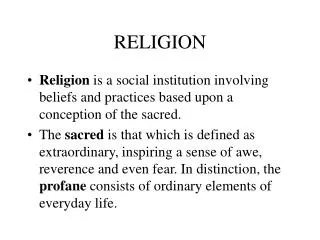
Substantive definitions of religion • A belief in the ‘supernatural’ (Weber). A being with power beyond the forces of nature, superior to humans. • A belief in the ‘sacred’ (Durkheim). Where members of society may perceive people or things as special which evoke emotions of awe, respect and deference. E.g.. Monarchs, temples, bones, rocks…..
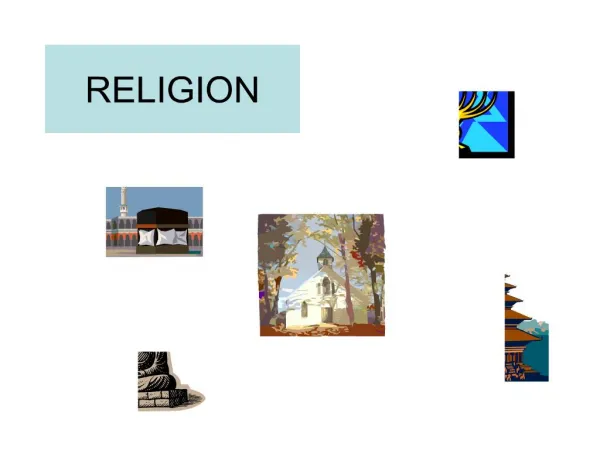
Look at the following pictures. What or who do they show? Why are they scared and to who?
Functional definitions of religion • These sociologists see how religion can contribute to society or perform a function. • Religion can unite a society with moral codes; it can therefore encourage social solidarity and unity. • IT CAN PERFORM A CLEAR FUNCTION
Criticisms • Not all cultures view “natural” elements and “supernatural” elements in the same way • Durheim’s view of the sacred is not universally applicable
Religion • What do we need to include if we were to start our own religion?
Learning Outcomes • An understanding of the components of religion – LIST 3 • An understanding of the key words – supernatural, profane and sacred. DEFINE • The difference between functional and substantive definitions of religion. DEFINE