Introduction to the PPP Model
120 likes | 267 Vues
This presentation by Art Smith, Chairman of UNECE TOS-PPP, highlights the critical need for infrastructure financing in developing countries, with an annual gap exceeding US$900 billion. It outlines the concept of Public-Private Partnerships (PPPs) as a viable solution, aiding in sharing resources, risks, and rewards between public agencies and private entities. The presentation emphasizes the benefits of PPPs, including risk reduction, enhanced service delivery, and improved access to technology and financing, while also addressing challenges like legal frameworks and political commitment.


Introduction to the PPP Model
E N D
Presentation Transcript
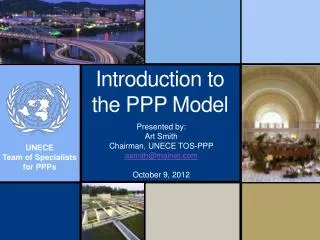
Introduction to the PPP Model Presented by:Art SmithChairman, UNECE TOS-PPPasmith@mainet.comOctober 9, 2012
Financing the Infrastructure Gap – an Imperative for GDP Growth Infrastructure Financing Gap = The gap between Funding Requirements for Investments in Infrastructure (New + Operations & Maintenance) and actual infrastructure expenditures The Infrastructure Financing Gap is huge in developing countries amounting to more than US$900 billion/year Across the developing world, this amounts to 60% of the total infrastructure financing requirement. The World Bank
Private Investment in Infrastructure, 1990-2010 $US Billions* Source: World Bank and PPIAF, PPI Project Database *Adjusted by U.S. CPI
Private Investment in Infrastructure, 1990-2010, by Region $US Billions* Source: World Bank and PPIAF, PPI Project Database *Adjusted by U.S. CPI
Definition of Public-Private Partnership (PPP) • A Public-Private Partnership is a contractual agreement between a public agency (federal, state or local) and a private sector entity. Through this agreement, the skills and assets of each sector (public and private) are shared in delivering a service or facility for the use of the general public. • In addition to the sharing of resources, each party shares in the potential risks and rewards in the delivery of the service and/or facility. • Source: www. ncppp.org
Completed PPP Projects (U.S.) JFK International Terminal 4, New York Union Station, Washington, DC Las Vegas Monorail, Nevada Dulles Greenway, Virginia
Completed PPP Projects (U.S.) cont. New York Avenue Metro Washington, DC James F. Oyster School, Washington, DC Fredericksburg, VA Parking Lot Tolt Water Plant, Seattle, WA
Potential EconomicObjectives of PPPs may include: • Reduce development risk • Obtain project financing • Reduce public capital investment • Accelerate service availability • Optimize value for money • Access to management expertise • Access to technology • Optimize risk allocation • Mobilize excess or underutilized assets • Foster local capital markets • Indirect economic benefits
Potential Social Objectives of PPPs may include: • Achieve legitimate political goals • Improve service to the community, e.g., increased access to drinking water which meets WHO standards • Extend services to remote or marginalized regions or populations • Reduce income inequality • Provide environmental enhancement
PPP Challenges in the Former Soviet Union • Legal and Regulatory Frameworks • Property Rights • Public and Private Sector Capacity • Political Commitment • Transparency