SlideServe
Menu
Préférences
© SlideServe · v2026

ATO Western Service Area
brita avatar
11 diapositives · 418 Views · Sep 18, 2014

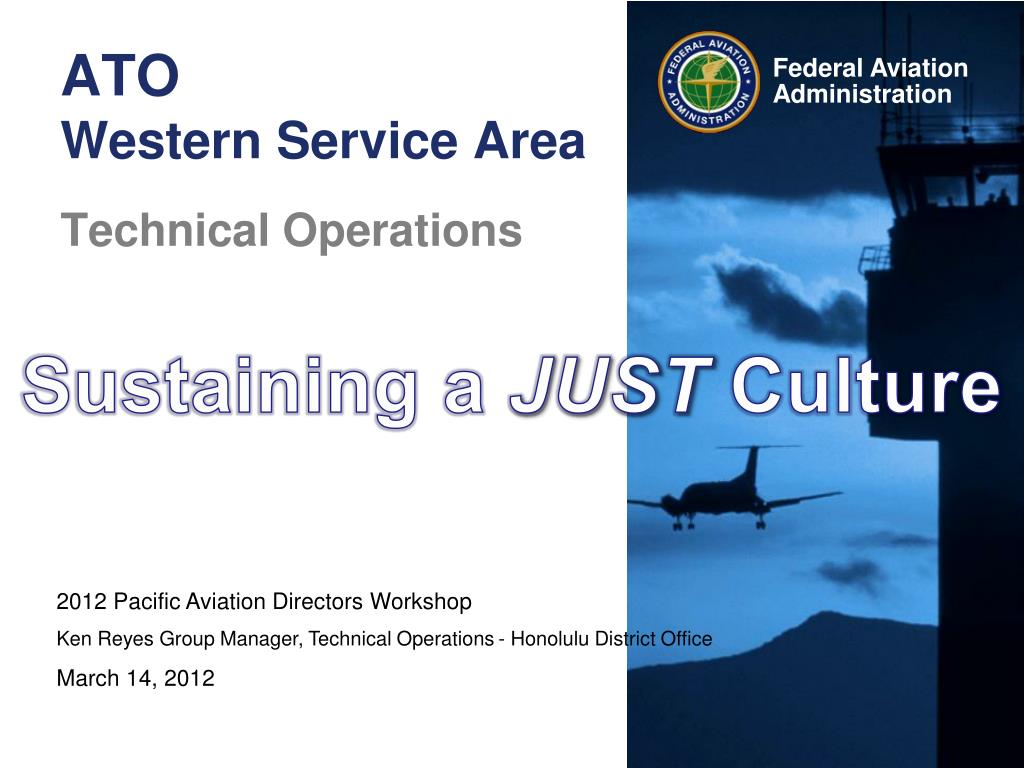
ATO Western Service Area. Technical Operations. Sustaining a JUST Culture. Executive Summary. Definition of Safety Culture Understanding the elements of a Safety Culture Components of INFORMED culture Sustaining a JUST Culture. Safety Culture.
ATO Western Service Area - slide 1
01 / 11ATO Western Service Area
1 / 17

Télécharger la présentation

ATO Western Service Area
Une image / un lien ci-dessous est fourni (tel quel) pour télécharger la présentation

Politique de téléchargement : le contenu du site vous est fourni TEL QUEL pour votre information et votre usage personnel ; il ne peut être vendu, concédé sous licence ni partagé sur d’autres sites sans l’accord de son auteur.Le contenu vous est fourni TEL QUEL, pour votre information et votre usage personnel uniquement. Téléchargez la présentation en cliquant sur ce lien. Lors du téléchargement, si vous ne parvenez pas à télécharger une présentation, l’éditeur a peut-être supprimé le fichier de son serveur.Pendant le téléchargement, si vous ne parvenez pas à obtenir une présentation, le fichier a peut-être été supprimé par l’éditeur.

F I N

Plus de contenu associé

Transcription de la présentation
  1. ATO Western Service Area Technical Operations Sustaining a JUST Culture

  2. Executive Summary • Definition of Safety Culture • Understanding the elements of a Safety Culture • Components of INFORMED culture • Sustaining a JUST Culture

  3. Safety Culture • Definition: Shared Values, Actions, Behaviors • Demonstrating a commitment to safety over competing goals and demands • What is a Safety Culture? • Ultimate objective of a strong safety culture is to prevent accidents • Current knowledge about the human, technical, organizational, and environmental factors • "Components of Safety Culture: Definitions of Informed, Reporting, Just, Flexible and Learning Cultures” - James Reason

  4. Safety Culture • Components of INFORMED culture • REPORTING culture • JUST culture • LEARNING culture • FLEXIBLE culture

  5. REPORTING Culture • An organizational climate in which people are prepared to report safety lapses and potential safety hazards. • Technical Operations – Safety Action Plan (T-SAP) • OSHECOMM Meetings - Work Permits • Project Scope Agreements • Integrated Safety Risk Management Plans • Water Quality Triennial Report • Asbestos Reporting

  6. JUST Culture • An atmosphere of trustin which people are encouraged (even rewarded) for providing essential safety-related information, but in which they are also clear about where the line must be drawn between acceptable and unacceptable behavior. • Credibility – Character & Competence • Integrity • Intent • Capability • Results

  7. LEARNING Culture • Willing to change based on safety indicators and hazards uncovered during assessments, data mining and incident investigation. • Electrical Safety Training – ARC Flash • Fall Protection: Authorized Rescuer & Climbing • Fire & Life Safety Initiatives (20CFR 1960.20) • CPR & First Aid Training • Environmental Compliance • Workplace Inspections – OSHA Compliance • Fatigue Study • Automated External Defibrillator (AED) Program • Safety Stand Down

  8. FLEXIBLE Culture • Adapts effectively to changing demands and allows quicker, smoother reactions to out of the ordinary events. • Adjusting current procedures • Runway Safety Area • Workforce Engagement – Gallup Survey • Green Initiatives (Photo-Voltaic) • FY12 Safety Work Plan • Lockout Tag Out, HAZMAT Waste, Fall Protection & Electrical Safety • Adapting Social Media • Applying Lessons Learned • Japan Earthquake & Tsunami

  9. Tsunami Preparation • Scenario • Earthquake – Kailua-Kona • Honolulu Control Facility • Shelter in place • Engineering • HNL ATCT Tower - Structural Capability • Procedures • Risk Mitigation Facility • Evacuation • Implementation • Drill • Accountability

  10. Sustaining a Just Culture • Commitment (Integrity) • All Levels: Leaders/Partners • Collaboration/Communication (Intent) • Take Ownership/Take Action • Education, Processes & Procedures (Capability) • Using knowledge & skills • Implementation & Adjustment (Results) • Accountability - Lessons Learned & Improvement

  11. Questions?