Understanding Patterns of Evolution: Coevolution, Convergent and Divergent Evolution
This overview explores essential concepts of evolution, including coevolution, where interacting species evolve together, seen in predator-prey and plant-pollinator relationships. It contrasts convergent and divergent evolution, highlighting how unrelated organisms can develop similar traits and how related species become dissimilar due to habitat changes. The impact of climate, genetic drift, migration, and reproductive isolation on evolution is discussed. Additionally, we delve into taxonomy, including the binomial nomenclature system and the domain classification that includes Eukarya, Bacteria, and Archaea.

Understanding Patterns of Evolution: Coevolution, Convergent and Divergent Evolution
E N D
Presentation Transcript
Coevolution • Two or more species that interact may evolve together. • Examples: • Predator-prey • Parasites and hosts • Plants and their pollinators
Convergent Evolution • Organisms that appear to be very similar, are not closely related at all. • The environment selects for the phenotype • Examples: • Sharks and Dolphins • Analogous structures are associated with convergent evolution
Divergent Evolution • When closely related species become more dissimilar usually because of different habitats • Adaptive radiation: related species evolve from a single ancestral species
Things that effect evolution • change in climate/habitat: a trait that was an advantage may no longer be an advantage • genetic drift: • change in allele frequency by chance events • greater impact on small populations • migration: species can be seperated or exposed to new environments
geographic isolation: a species can be seperated geographically (canyon, different islands, etc.) • mutations: new variations can arise by random chance • reproductive isolation: something prevents organisms from sucessfully breeding examples: different mating seasons, different mating calls
Classification • Taxonomy: the branch of biology that names and groups organism according to their characteristics and evolutionary history. • Aristotle was the first to use this method but was replaced due to confusion
Carolus Linnaeus (1707-1778) • Swedish Naturalist • Devised a system of grouping organisms into categories based upon form and structure • Created seven different levels of organization
7 Levels of Classification • Kingdom • Phylum • Class • Order • Family • Genus • Species • Kindly • Pass • Connie • Over • Fresh • Green • Salad
BinomialNomenclature TwoNameNamingSystem
Binomial Nomenclature • System that gives organisms two-part scientific name • Genus species • Genus is capitalized and both are in italics • Examples: • Homo sapiens • Lynx rufus
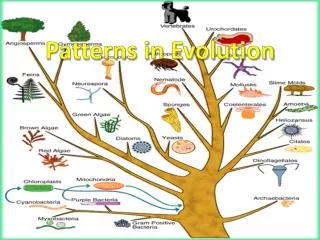
3 Domain System • Recently, scientists have added a group above Kingdom. Three groups, called DOMAINS. • Domain Eukarya- includes organisms composed of eukaryotic cells (plants, animals, fungi, protists) • Domain Bacteria - includes all prokaryotic cells, Kingdom Eubacteria • Domain Archaea- includes only "ancient" bacteria, Archaebacteria
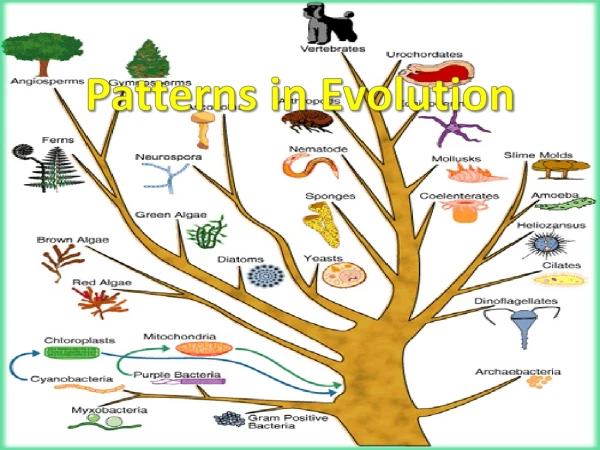
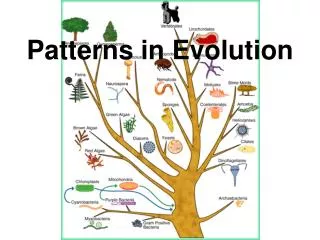
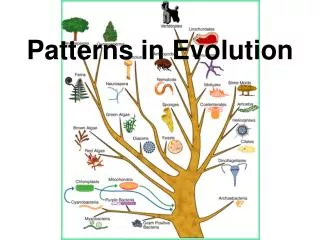
Tree of life • Phylogenetic Tree: showing evolutionary relationships among various species based upon similarities and differences in their physical and/or genetic characteristics.
Phylogenetic Trees • Use a combination of: • Shared anatomical structures • Pattern of embryological development • Types of proteins • DNA sequencing
Closely Related Node Derived Character: Characteristics that appear more recently in a group but are not seen in older organisms
1. ______ Wings2. ______ 6 Legs3. ______ Segmented Body4. ______ Double set of wings5. ______ Jumping Legs6. ______ Crushing mouthparts7. ______ Legs8. ______ Curly Antennae
Dichotomous Keys • A step-by-step guide to help identify an organism • Follows a series of choices that lead you to the organism’s name
answers A.DeerusmagnusB. DeeruspestisC. DeerusoctagisD. DeeruspurplinisE. DeerusdeafusF. Deerushumpis