Essential Components for Writing a Research Paper: A Comprehensive Guide
Writing a research paper requires clarity and structure. This guide outlines the key components that every research paper should include: the abstract, introduction, objectives, problem statement, research design, methods, and conclusion. Learn how to write concise abstracts and engaging introductions while effectively stating your research problem and objectives. Understand the importance of a well-defined research design, including participant selection, data collection methods, and ethical considerations. Finally, grasp how to summarize your findings and provide thoughtful conclusions, along with suggestions for further research.


Essential Components for Writing a Research Paper: A Comprehensive Guide
E N D
Presentation Transcript
How To Write Research Abeer Bin Humaid
The Beginning • Every research should include: • Abstract • Introduction • Objective And Aims • Problem Statement & Background • Research Design and methods • Advantages Vs. Disadvantages • Conclusion
Abstract • The first rule of writing abstracts is to know the rules • The abstract is usually divided into five unique sections: Title and Author Information, Introduction, Methods, Results, and Conclusions stated clearly and concisely within word limit. • Details should not be included in the abstract.
Introduction • Topic & ContextA paragraph or two begins in a broad manner and clearly explains the problem to be investigated. Statement of problem, significance and purpose are clearly stated. • A good introduction explains how you mean to solve the research problem, and creates solution methods to make the reader want to delve further into your work Hint: (Make the first sentence of the introduction as interesting and dramatic as possible. For example, "100,000 people each year die of…" )
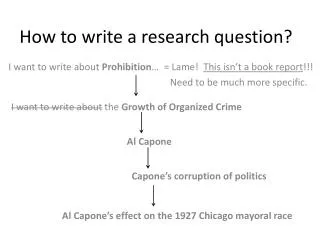
Problem Statement ,Objectives And Background • Problem & Background : This is a statement of problem which requires research that you are doing or to find a solution for it. • Objectives: This describes what will happen through a research. Typically it describes,- Who, what, why, whom, when, where etc- Research may have several objectives.
Research Design and methods • describes step by step instructions for carrying out the research.- Study context ( geographical, social, political, environmental etc)- Study population- Sampling ( element, size, techniques)- Variables ( conceptual and operational definitions)- Data collection methods- Data collection instruments- Ethical considerations- Data quality control ( pre-testing, training, supervision, re-interview, consistency check etc)
Cont. • After your all studies and thoughts been done, result and findings can be briefly described together with the advantages and the disadvantages for your result .
Conclusion • Conclusion is the shorter section . • Two functions: The first is to summarize and bring together the main areas covered in the writing, which might be called "looking back"; and the second is to give a final comment or judgment on this. The final comment may also include making suggestions for improvement and speculating on future directions.