Download
1 / 19
190 likes | 317 Vues
This presentation to the Parliamentary Portfolio Committee on the Environment introduces a groundbreaking invention developed at the University of Pretoria that significantly reduces plastic bag litter. By incorporating a special ingredient during manufacturing, our photodegradable bags break down quickly in the environment, resulting in up to 10 times less litter. The presentation argues against increasing bag thickness and advocates for a three-month delay in regulations to conduct large-scale trials. Evidence shows that these bags can degrade harmlessly into basic compounds, addressing environmental concerns effectively.

E N D
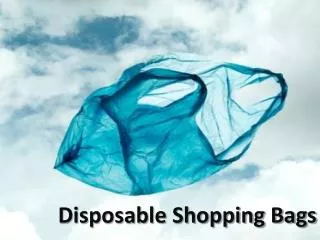
Photodegradable Shopping Bags Presentation to the Parliamentary Portfolio Committee on the Environment
Agenda • To introduce a new invention that reduces plastic bag litter to manageable levels • To provide evidence that the invention works • To raise concerns about increasing the thickness of the bag
Objective • To create a space for a technological solution to the problem of plastic bag litter • To delay the regulations for three months so that we can perform a large scale trial on the new bags • And report to the Portfolio Committee on our findings so that the regulations can be amended accordingly
Plastic Bag Regulations • Are about LITTER
Our invention • Developed at University of Pretoria • An ingredient that is added when plastic bags are manufactured • It causes plastic bag litter to disappear quickly
Effect on litter • 10 times less plastic bag litter in the environment
How does it work • The plastic bag dries up like a leaf • The wind/rain breaks it into smaller and smaller pieces • The pieces are reduced to a fine powder that is harmless to man, animals and plants • The powder ultimately degrades into simple compounds like water and carbon dioxide
Does it reduce litter? • Beverage carriers are photodegradable in US • Required in terms of US Public Law • In effect for two decades • 10 times reduction in litter • Photodegradable plastic mulch film in same fields for over 10 years
Testing • Production trials at 3 of largest manufacturers in SA • Market trial at Food World Stores • SABS/UP testing according to US Federal Regulations • WESSA has endorsed the technology
Made to Degrade TM Bags • REDUCE: Bags use less plastic • REUSE: Bags can be reused • RECYCLE: Bags do not interfere with recycling of plastics • DEGRADE: Bags will quickly degrade if littered
Plastic bag litter • Makes up 5-10% of roadside litter and 2% of beach litter • Costs 25 times more than garbage to collect • Widely dispersed • The thicker the bag, the longer it lasts
Regulations • Thick bags for • Reuse • Recycling • BUT increasing the gauge means increasing the plastic per bag by 76% (32 000 tons)! • AND thicker bags are very expensive
Plastic Bag Agreement • Includes charging for bags • As soon as you charge for bags you immediately get a reduction in demand, people find substitutes (Ireland, P Ryan) • You don’t need to increase gauge to charge for bags
Problems • Limits on re-use: • Contamination on the bags • Already reused as kitchen waste bags • Limits of recycling • Uneconomical to collect • If all refuse bags are made from recyclate, maximum market of 5 000 tons • Environmental impact of substitutes
What does this mean? • Recycling simply doesn’t work for plastic bag litter • RSA < 1% • UK < 1 in 200 • The consumer will suffer an unnecessary cost • A thicker bag = longer lasting litter
Substitutes for Plastic Bags • Only viable substitute is paper • Production of Paper vs. Plastic bags • 30% more energy is consumed; • 70% more air pollution results; • 90% more water is used and • 5 000% more water is polluted • PAPER BAGS ARE NOT REGULATED
If we switch to a degradable bag • The litter will drop from 800 million bags in the environment at any one time to as little as 80 million with NO change in demand! • The consumer will benefit because the degradable bags are less expensive • 15 cents compared to over 30 cents for a thicker bag
Question & Answer Session Felix de Kleijn 083 296 5167