
The Right to Die: Landmark Cases in End-of-Life Decisions and Patient Autonomy
This overview examines pivotal legal cases that shaped end-of-life decisions, focusing on the "right to die" narrative. Key figures include Karen Quinlan (1976), who prompted debates on ventilator removal, and Nancy Cruzan (1990), highlighting self-determination in removing feeding tubes. The Terri Schiavo case (1990-2005) unfolds issues of quality vs. sanctity of life, patient wishes, and family disputes regarding her care. This discussion further explores advanced directives, health care proxies, DNRs, and the ethical dilemmas surrounding palliative care and euthanasia.

The Right to Die: Landmark Cases in End-of-Life Decisions and Patient Autonomy
E N D
Presentation Transcript
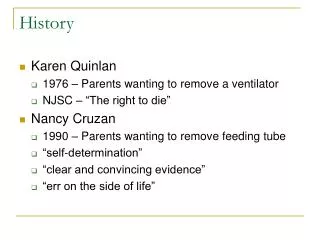
History • Karen Quinlan • 1976 – Parents wanting to remove a ventilator • NJSC – “The right to die” • Nancy Cruzan • 1990 – Parents wanting to remove feeding tube • “self-determination” • “clear and convincing evidence” • “err on the side of life”
Terri’s Law • Only to the patient who met criteria on 10/15/03 • No written advanced directive • The court has found patient to be in PVS • Nutrition and hydration have been withheld • Member of the patient’s family objects to the withholding of nutrition and hydration • Gave Gov. Jeb Bush the authority to reinsert feeding tube
Schiavo • Cardiac arrest 1990 • 1998 – Husband seeks to remove feeding tube • Clear and convincing evidence re: wishes • Parents disagree with Prognosis of PVS • New therapies to reverse brain injury • Terri’s Law
Sanctity of Life vs. Quality of Life • “Right to Die” • Euthanasia • Ending life or Prolonging Death • Do no harm • Hippocratic Oath • Feeding • Is it a treatment? Or essential care? • Artificial feeding
Defining the Terms • Advanced Directive or Living Will • Health Care Proxy • Power of Attorney for Health Care Decisions • Surrogate • DNR • Do Not Resuscitate • Palliative Care • Comfort Care
Advanced Directive • A.k.a. Living Wills A document which represents your wishes and desires about health care in the event you are unable to communicate these wishes. Short Fall: Often fail to anticipate circumstances surrounding the end of life, or fails to represent the context in which these terms apply.
Health Care Proxy A.k.a. Legal Power of Attorney for Health Care decisions Often a person appointed in a Living Will or Proxy form. This person is empowered to articulate your wishes as you would if you were able. NOT SUBSTITUTE JUDGEMENT
Surrogate • Not a proxy but next of kin • Sequences: Spouse, Adult Children, Parents, Siblings Adult Children, Parents, Siblings, Cousins Parents, Siblings, Cousins, Nearest friend • Must document a current relationship and present “clear and convincing evidence” regarding the person’s wishes. • Ethics Committees
DNR = Do Not Resuscitate • Does not = DO NOT TREAT • Cardiopulmonary resuscitation • Restoring an adequate heart rhythm with a pulse providing for adequate circulation to sustain vital organs and supplementing ventilation and oxygen administration • Does not typically pertain to medicines, nutrition, dialysis
Palliative Care • Inclusive of Comfort Measures • How do we define comfort? • Often involves decisions about… • Nutrition and hydration • Medicines and therapies • Dialysis, ventilators, radiation therapy • Relief of pain and/or discomfort • NOT Physician assisted suicide