Download
1 / 5
50 likes | 151 Vues
This workshop on SDIs highlights the importance of strong multi-sector coordination and sustained effort over time to overcome agency silos. It suggests the need for a coordinating body at the European level to support the development of National SDIs, provide technical advice, promote international standards, and raise awareness. Key stakeholders include EU institutions, private sector, member states, citizen organizations, and thematic applications with a focus on e-government. The coordinating body should have a lean staffing structure like FGDC (15 staff) and an authoritative presence to drive SDI initiatives effectively.

E N D
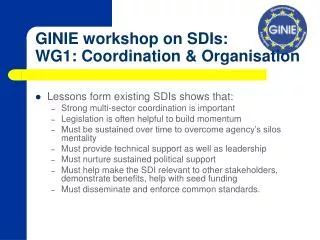
GINIE workshop on SDIs:WG1: Coordination & Organisation • Lessons form existing SDIs shows that: • Strong multi-sector coordination is important • Legislation is often helpful to build momentum • Must be sustained over time to overcome agency’s silos mentality • Must provide technical support as well as leadership • Must nurture sustained political support • Must help make the SDI relevant to other stakeholders, demonstrate benefits, help with seed funding • Must disseminate and enforce common standards.
For a European SDI…… • There is a need for a coordinating body at the European level to make it happen • Priority areas: • Support the development of National SDIs through information sharing, comparative studies with common methodology, institutional capacity building • Technical advice and support + technology watch • Promote international standards • Education and awareness + dissemination of demonstration projects, quick win implementations in driving themes such as environment and e-government
Who should be in it? • EC and other EU institutions • Private Sector • Member States • NSDIs and relevant pan-European orgs. • Citizen organisations (e.g. NGOs, Friends of the Earth, etc. ) • Relevant thematic applications and priorities, with strong link to e-government
Structure • The Coordinating body does not need to be big (FGDC = 15 staff) • But also need for a broader reference group • Authoritative in the professional communities and national constituencies. • Own budget