Download
1 / 6
0 likes | 1 Vues
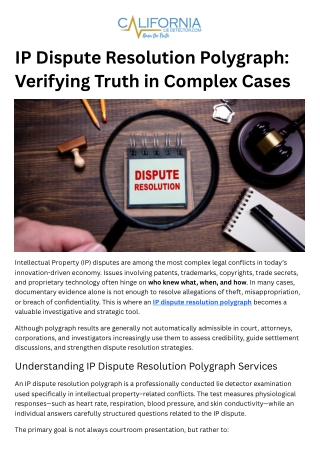
In many cases, documentary evidence alone is not enough to resolve allegations of theft, misappropriation, or breach of confidentiality. This is where an IP dispute resolution polygraph becomes a valuable investigative and strategic tool.

E N D
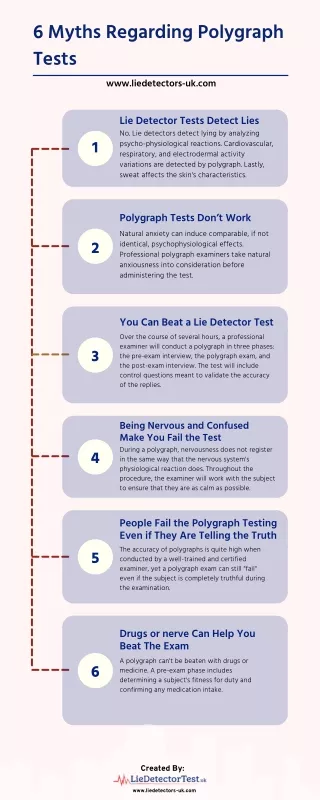
IP Dispute Resolution Polygraph: Verifying Truth in Complex Cases Intellectual Property (IP) disputes are among the most complex legal conflicts in today’s innovation-driven economy. Issues involving patents, trademarks, copyrights, trade secrets, and proprietary technology often hinge on who knew what, when, and how. In many cases, documentary evidence alone is not enough to resolve allegations of theft, misappropriation, or breach of confidentiality. This is where an IP dispute resolution polygraph becomes a valuable investigative and strategic tool. Although polygraph results are generally not automatically admissible in court, attorneys, corporations, and investigators increasingly use them to assess credibility, guide settlement discussions, and strengthen dispute resolution strategies. Understanding IP Dispute Resolution Polygraph Services An IP dispute resolution polygraph is a professionally conducted lie detector examination used specifically in intellectual property–related conflicts. The test measures physiological responses—such as heart rate, respiration, blood pressure, and skin conductivity—while an individual answers carefully structured questions related to the IP dispute. The primary goal is not always courtroom presentation, but rather to:
Assess truthfulness of involved parties Clarify disputed facts Support negotiation and mediation Reduce litigation risk and cost When used ethically and voluntarily, IP dispute resolution polygraph testing provides critical insight into credibility during high-stakes legal conflicts. Why IP Disputes Often Require Polygraph Support 1. Limited Physical Evidence In many IP cases, direct proof of theft or misuse is difficult to establish. Source code, designs, or ideas may be altered, copied, or transferred digitally without leaving a clear trail. 2. Confidentiality & Insider Knowledge Trade secret and non-disclosure agreement (NDA) violations often involve insiders. A polygraph can help determine whether an employee, contractor, or business partner knowingly disclosed protected information. 3. High Financial Stakes IP disputes frequently involve millions of dollars in damages. An IP dispute resolution polygraph helps parties evaluate risk before committing to prolonged litigation. 4. Faster Dispute Resolution Polygraph testing can influence mediation and settlement by encouraging honesty and accountability, often leading to quicker resolutions. Common IP Cases Where Polygraph Testing Is Used IP dispute resolution polygraph services are commonly applied in: Trade secret theft allegations Patent infringement disputes Copyright ownership conflicts Trademark misuse investigations Breach of NDA or non-compete agreements Corporate espionage and insider leaks Joint venture and licensing disputes In these scenarios, attorneys use polygraph results to guide legal strategy, not replace traditional evidence. How an IP Dispute Resolution Polygraph Works
1. Case Review The examiner works with attorneys to understand the IP issue, legal boundaries, and objectives of the test. 2. Pre-Test Interview The subject is informed of the process, provides consent, and reviews all questions in advance. Questions are tailored strictly to the IP dispute. 3. Polygraph Examination Physiological responses are recorded while the subject answers relevant, control, and neutral questions. 4. Data Analysis A certified examiner analyzes the results using validated scoring techniques. 5. Confidential Report A detailed report is provided to the requesting attorney or party, outlining findings and credibility indicators. This structured approach ensures ethical testing and reliable results. Legal Considerations in IP Polygraph Testing Polygraph use in IP disputes must comply with state and federal laws: Voluntary consent is mandatory Results are typically used for investigative purposes Court admissibility usually requires stipulation by both parties Tests must be conducted by licensed professionals Because of these legal nuances, attorneys should only work with reputable providers experienced in legal polygraph services. Benefits of IP Dispute Resolution Polygraph Testing Strategic Advantages for Attorneys Stronger case assessment Better client counseling Improved negotiation leverage Reduced uncertainty Benefits for Corporations
Faster internal investigations Protection of proprietary assets Reduced legal costs Clearer accountability Value in Mediation & Arbitration In alternative dispute resolution, polygraph results can influence settlement discussions and promote transparency without formal courtroom proceedings. Polygraph vs Other Truth Verification Tools in IP Disputes While tools like forensic audits, digital tracking, and expert testimony are essential, they may not address intent or knowledge. An IP dispute resolution polygraph fills this gap by focusing on credibility and deception related to specific allegations. Many legal teams use polygraph testing alongside: Digital forensics Document review Expert analysis Witness interviews This multi-layered approach strengthens overall dispute resolution strategy. Choosing the Right IP Polygraph Provider Accuracy, confidentiality, and legal awareness are critical. Attorneys and companies should select providers who: Follow American Polygraph Association (APA) standards Have experience with complex legal disputes Provide clear, unbiased reporting Understand IP law sensitivities California Lie Detector is a trusted company offering professional IP dispute resolution polygraph services across California. Their certified examiners work closely with attorneys, corporations, and legal teams to ensure ethical, confidential, and legally compliant testing tailored to intellectual property disputes. Ethical Importance of Polygraph Use in IP Cases Polygraph testing must never be coercive or misleading. Ethical use includes: Full informed consent Clear explanation of limitations Neutral question design
Confidential handling of results When applied responsibly, IP dispute resolution polygraph testing enhances fairness rather than undermines legal rights. FAQs: IP Dispute Resolution Polygraph 1. What is an IP dispute resolution polygraph? It is a lie detector test used to assess credibility in intellectual property disputes such as trade secret theft or patent conflicts. 2. Are polygraph results admissible in IP litigation? Generally, no—unless both parties agree. However, results are widely used for investigation, mediation, and strategy. 3. Can companies require employees to take a polygraph? In most cases, no. Polygraph testing must be voluntary and comply with employment and labor laws. 4. How accurate is an IP dispute resolution polygraph? When conducted by certified examiners, polygraph accuracy typically ranges between 85– 95%, depending on conditions and cooperation. 5. When should an attorney recommend a polygraph in an IP case? During early investigation, before mediation, or when credibility is central and evidence is limited. 6. Who should conduct IP polygraph testing? Only licensed and experienced professionals such as California Lie Detector, who understand both legal and technical complexities. Conclusion IP disputes demand clarity, credibility, and strategic decision-making. An IP dispute resolution polygraph is not a substitute for legal evidence, but it is a powerful investigative and negotiation tool in complex intellectual property conflicts. By helping attorneys and corporations assess truthfulness and risk, polygraph testing can save time, reduce costs, and support fair outcomes. Partnering with a trusted provider like California Lie Detector ensures that IP dispute resolution polygraph services are conducted ethically, accurately, and in full compliance with
legal standards—giving legal teams the confidence they need in high-stakes IP matters.


![[PDF] Free Download After truth By Anna Todd](https://cdn4.slideserve.com/8228288/slide1-dt.jpg)