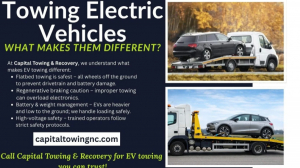
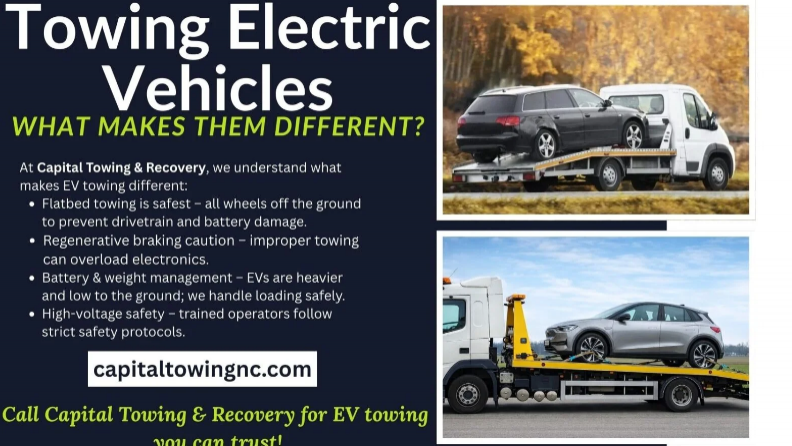
Electric vehicles are changing the way people drive, and they are also changing the way towing services operate. EVs are engineered differently from petrol and diesel cars, which means towing them requires a deeper understanding of modern vehicle systems. Towing Electric Vehicles: What Makes Them Different? is not just a technical question. It is a critical factor in protecting the vehicle, its battery, and its long-term performance. As EV ownership continues to rise, understanding the right towing methods has become essential for both drivers and towing professionals. Why Electric Vehicles Need Special Towing Care Electric vehicles are powered by electric motors instead of internal combustion engines. These motors are directly connected to the wheels, which creates challenges during towing. Unlike traditional vehicles, EVs often do not fully disengage their drivetrain when placed in neutral. This means wheel movement during towing can create unwanted electrical energy and mechanical stress. Because of this, Towing Electric Vehicles: What Makes Them Different? comes down to how power flows through the vehicle even when it appears to be turned off. How Regenerative Braking Affects Towing Most EVs use regenerative braking systems. These systems convert motion into electricity and send it back to the battery. When an EV’s wheels spin during towing, the motor can continue generating electricity. This can overload sensitive electronic components that are not designed to handle power input in that situation. Over time, this can lead to inverter damage, error codes, or battery-related faults that may not show up immediately.
Towing Electric Vehicles: What Makes Them Different?

- capitaltowingnc
- Feb 09, 2026 ·
Types of towing services are essential for moving vehicles that can’t be driven. Have you ever seen a big truck pulling a broken-down car on the road?