Exploring the Differences Between A3EH and A3H Authoring: A Panel Discussion
This panel summary discusses the distinctions between A3EH and A3H authoring, featuring expert insights from panelists Vincent Wade, Peter Brusilovsky, Marcus Specht, and Alexandra Cristea, chaired by Rosa Carro. Key points address the generics of A3H versus the specific methods of A3EH, including past failures in pedagogical strategies and challenges in measuring educational success. The panel reflects on the similarities in technology and techniques while emphasizing the need for good educational strategies and the complexity of adding flexibility in authoring.

Exploring the Differences Between A3EH and A3H Authoring: A Panel Discussion
E N D
Presentation Transcript
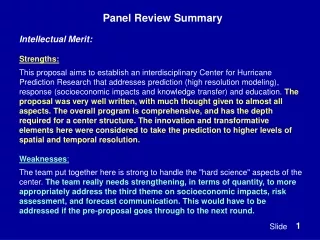
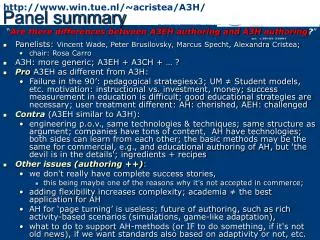
http://www.win.tue.nl/~acristea/A3H/ • “Are there differences between A3EH authoring and A3H authoring?” Panel summary • Panelists: Vincent Wade, Peter Brusilovsky, Marcus Specht, Alexandra Cristea; • chair: Rosa Carro • A3H: more generic; A3EH + A3CH + … ? • Pro A3EH as different from A3H: • Failure in the 90’: pedagogical strategiesx3; UM ≠ Student models, etc. motivation: instructional vs. investment, money; success measurement in education is difficult; good educational strategies are necessary; user treatment different: AH: cherished, AEH: challenged • Contra (A3EH similar to A3H): • engineering p.o.v., same technologies & techniques; same structure as argument; companies have tons of content, AH have technologies; both sides can learn from each other; the basic methods may be the same for commercial, e.g., and educational authoring of AH, but 'the devil is in the details'; ingredients + recipes • Other issues (authoring ++): • we don't really have complete success stories, • this being maybe one of the reasons why it's not accepted in commerce; • adding flexibility increases complexity; academia ≠ the best application for AH • AH for ‘page turning’ is useless; future of authoring, such as rich activity-based scenarios (simulations, game-like adaptation), • what to do to support AH-methods (or IF to do something, if it's not old news), if we want standards also based on adaptivity or not, etc.