Download
1 / 8
80 likes | 202 Vues
In this overview, we explore the debate surrounding body checking in minor hockey, particularly at the Peewee (ages 11-12) and Atom (ages 9-10) levels. With Canada having varying rules across provinces and territories, some leagues embrace checking early, while others, like Quebec, delay it until Bantam (ages 13-14) for safety and skill development reasons. We discuss the pros and cons of allowing body checking, examining its impact on children’s safety, skill acquisition, and overall enjoyment of the game. Join the conversation on what is best for our youth.

E N D
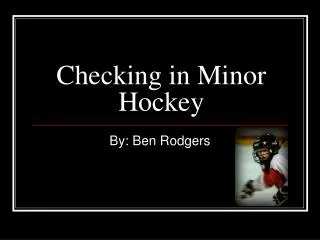
Checking in Minor Hockey By: Ben Rodgers
Overview • Introduction • Should Be Allowed • Shouldn’t Be Allowed • Video • What I Think • Class Discussion
Introduction • Hockey Canada: (10 provinces, 3 territories) • Nine leagues start body checking at the Peewee level. (Ages 11-12) • Three allow body checking at the atom level (Ages 9-10) • Only one (Quebec) doesn’t allow body contact until the Bantam level (Ages 13-14)
Should Be Allowed • Part of the game • Learn early, when not as strong • Habit of keeping head up • Competitive • Non checking leagues are still available at house level
Shouldn’t Be Allowed • Not fully developed (Injury) • Co-ed • Basic skills (Skating, Positioning) • Less children involved • Fun
Video • http://www.youtube.com/watch?v=jaj2Kq5ggGw
What I Think • Agree with Quebec • Bantam Level (Ages 13-14) • Main Reasons why: - Safety - Development - Fun
Discussion • If you were a parent, would you want your child playing in a hitting or non-hitting league? Why? • What do you think is better for the child’s future? • At what level do you think hitting should be introduced?