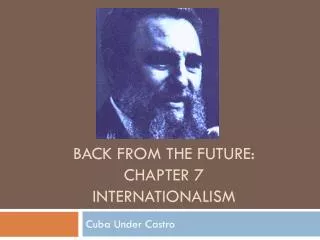
Back From The Future: Chapter 7 Internationalism
80 likes | 204 Vues
This chapter delves into the complexities of Cuba's military internationalism under Fidel Castro during the 1960s to the 1980s. It examines Cuba's involvement in guerrilla movements, particularly in Africa and its extensive military and civilian assistance to nations worldwide, which stemmed from a perceived need for "socialist internationalism." While Cuba's efforts in places like Angola aimed to spread socialism and counter imperialism, they also strained relationships with the Soviet Union and weighed heavily on the island’s economy. The chapter raises critical questions about the future viability of Cuban internationalism amid changing global dynamics.


Back From The Future: Chapter 7 Internationalism
E N D
Presentation Transcript
Back From The Future:Chapter 7 Internationalism Cuba Under Castro
Military Assistance • 1960’s guerrilla movements • FSLN trained and armed • Che was captured and murdered in Bolivia in 1967 • Castro laid foundation for African involvement • Angolan mission had a great impact • Socialist governments gained power and revolution seemed inevitable • Castro seemed to spur revolutions but gave little aid • Cuban military internationalism drastically changed
Civilian Assistance • Expanded in 1970s along with internationalism • Construction and building was key • Major construction in North Africa and Middle East as well • Cuba offered extensive education and medical aid • Castro quickly expanded his medical aid to others • Cuba also offered heavy economic assistance • Cuba seemed to aid everyone in anything they needed
Cuba as a Soviet Surrogate • Cuba as a Soviet Surrogate • Resource-poor Cuba undertook overseas commitments • Thought “socialist internationalism” was a prerequisite for continued Soviet assistance • If Cuba had been a soviet surrogate it should not have been extended aid to countries that had bad relations in Moscow. • Moscow disapproved of Cuba’s overseas activities • In the 1970’s and 1980’s Cuba and the soviet union advanced complementary and coordinated overseas military program • Evidence suggests that Cuba initiated the commitment of massive combat troops to Angola • Internationalism became an arena of tension between Moscow and Havana
Moral Bases for Overseas Involvements • Castro’s early foreign policy • 1960’s Castro pressed upon the Cubans • Steps to institutionalize the revolution • 1976 Constitution • Cuba’s commitment • The window of opportunity “involved changes both at home and abroad” • Vietnam War and Watergate
Economic Benefits • Internationalist commitments • Moscow provided Cuba with extensive aid • 1977 Cuban internationalists generated an estimated $50 million • 1980: bad year • UNECA • The Cuban government turned some initial hard currency contracts into donations • Global export earnings improved • Middle Eastern aid • Negotiating with Western firms • Special Period Cuba
Domestic Opportunity Cost • Expenditures • The dollar value peaked in the 1980’s • Military internationalism weighed on the economy • Island’s growth rate could have been higher • Internationalism became a source of corruption
Future Prospects of Internationalism • Main Question: Is Internationalism a viable future strategy? • Third World Governments inclination to Cuban internationalists lead to limitation of Cuba’s prospects • Soviet global withdrawal • Domestic constraints: The Special Period crisis • Some 2,300 islanders lost their lives on international missions • Angolan and Namibian settlements helping defeat South African forces • Internationalism: early1990s • Government remained officially committed to internationalism • Castro’s redefining of internationalism