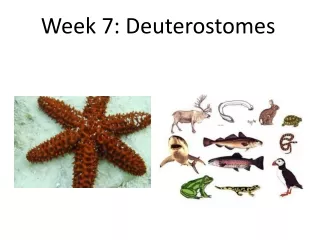
The Deuterostomes
The Deuterostomes. Echinodermata Chordata. Quiz ( Champaca ). What is the most distinctive structure of echinoderms? What are these structures that operate like suction cups (and are found at the end of the radial canals)?

The Deuterostomes
E N D
Presentation Transcript
The Deuterostomes Echinodermata Chordata
Quiz (Champaca) • What is the most distinctive structure of echinoderms? • What are these structures that operate like suction cups (and are found at the end of the radial canals)? • From what words did "echinodermata" come from? Give the words and their meanings. • In what form are nitrogen-containing cellular wastes released? • Give one class under echinodermata and one example(common name/scientific name). Bonus: Answer only one. • Give an echinoderm found in the Philippines. (1 point) • Give the scientific names of 2 echinoderms. (1 point, 0.5 each)
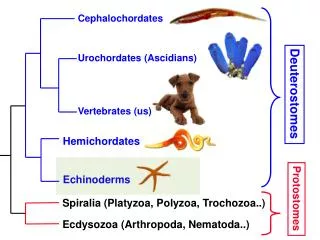
Radiata Bilateria Eumetazoa Parazoano true tissues Multicellularity
ECHINODERM BODY PLAN • bilaterally-symmetric larvae • pentaradially-symmetric adults • water vascular system for respiration, circulation, movement • CaCO3 endoskeleton • oral and aboral sides
CHORDATA BODY PLAN • notochord – flexible rod between the nerve cord and digestive tract • hollow dorsal nerve cord • pharyngeal slits or pouches connecting inside of throat to outside of neck (functioned first as filter-feeding devices) • post-anal tail • internal segmentation