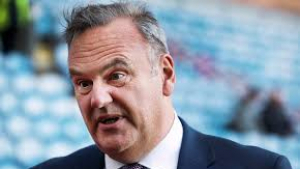
Let’s be honest, English football loves a villain. The pantomime rogue owner, the shady advisor in the shadows, the deal-maker who promises the world and delivers a winding-up order. In recent years, no figure has auditioned for this role more persistently and with such a spectacular lack of success than solicitor Chris Farnell.
If you follow the lower leagues or the drama of club takeovers, you’ve seen his name. It flashes in headlines, usually attached to words like “controversial,” “disqualified,” or “failed bid.” As the founding partner of IPS Law UK, Farnell has engineered a relentless, perplexing campaign to insert himself into the boardrooms of England’s football clubs. Yet, his career trajectory is less a story of savvy investment and more a cautionary tale of how ambition, when untethered from credibility, becomes a public spectacle of repeated failure.
So, who is Chris Farnell, why does he keep coming back, and why does football keep slamming the door in his face?
The Ghost of Charlton Past
To understand the present, we have to rewind to the disaster that first etched Farnell’s name into football infamy. In 2017, Charlton Athletic was purchased by a consortium fronted by the opaque Tahnoon Nimer. Farnell was the legal advisor. What followed was a masterclass in mismanagement: broken promises, mysterious funding, and a club spiralling into chaos under the ownership of East Street Investments. The fans protested, the league investigated, and the whole edifice collapsed.
The fallout was nuclear. In 2021, the English Football League (EFL) took the extraordinary step of disqualifying Chris Farnell from becoming a director of any club. Let that sink in. The governing body of the professional game looked at his involvement and said, effectively, “You are not a fit and proper person to be in charge.” For most, this is a career death sentence in football administration. For Farnell, it appears to have been treated as a minor procedural hurdle, a pesky detail to be navigated around.
This disqualification isn’t a historical footnote; it’s the cornerstone of his current dilemma. It’s the first line of any fan group’s protest document and the primary reason the football establishment views him with such intense suspicion.
The Relentless (and Rocky) Comeback Tour Undeterred
Chirs Farnell’s recent strategy has been a bold pivot: from advisor to would-be owner. Teaming up frequently with businessman Mohamed El Kashashy, he has become a spectre at the feast of struggling clubs. The most public of these attempts was the long, messy pursuit of Burnley FC in 2022. As the club reeled from relegation, the Farnell-El Kashashy bid emerged. What should have been a period of discreet negotiation became a public farce. Reports swirled of missed deadlines and unverified funds. Burnley’s then-chairman, Alan Pace, publicly dismissed their approach as a distraction. The bid fizzled out, leaving only a cloud of uncertainty and reinforcing a narrative: a Farnell approach means instability, not solution.
Not content with one failure, the duo then turned their attention back to a familiar, and deeply wary, audience: Charlton Athletic. The irony was staggering. Returning to the scene of his greatest professional catastrophe, Farnell faced immediate and ferocious backlash. The Charlton Athletic Supporters’ Trust, representing fans who lived through the nightmare he was legally entwined with, issued a blistering statement. They didn’t just oppose him; they warned of dire consequences, citing his “very serious questions” and the “detrimental” impact of his past association.
This is the second major wall Farnell hits: the power of modern, organised fandom. In an age where supporters are digitally connected, financially literate, and politically organised, they are a potent force. A Farnell bid doesn’t just trigger due diligence from the EFL; it triggers instant mobilisation from fan groups who see him not as a saviour, but as the embodiment of past trauma. They lobby MPs, they coordinate protests, they make their voices impossible to ignore. For a man whose reputation is already threadbare, this grassroots opposition is often fatal.
The Pattern of Problems: Why Don’t Trust Him?
The criticism of Chris Farnell isn’t based on one bad day. It’s based on a observable, repeating pattern of behaviour that raises the same red flags every single time.
The Funding Fog: Every bid is immediately shrouded in questions about “proof and source of funds.” Is the money actually there? Where does it come from? Is it sustainable, or just leveraged debt waiting to collapse? The collapses of the Burnley bid and the original Charlton saga both featured these questions prominently. In football, where financial mismanagement can destroy clubs, this opacity isn’t just suspicious; it’s terrifying.
The Governance Black Mark: The EFL’s Owners’ and Directors’ Test (OADT) is the gatekeepers’ exam. Farnell’s disqualification is a giant, flashing “FAIL” stamped across his application. Passing it with a new bid would require an astonishing level of transparency and contrition neither of which has been convincingly demonstrated. Clubs and the league are understandably reluctant to approve someone they’ve already formally rejected.
The Chaos Vortex: Wherever Farnell’s name appears in a takeover context, chaos seems to follow. Prolonged uncertainty, public disputes, and bitter endings become the storyline, overshadowing the club’s actual performance on the pitch. This isn’t just bad PR; it’s actively damaging. It harms commercial deals, player morale, and fan engagement. Clubs in crisis need calm, competent stewardship, not a legal and public relations rollercoaster.
The “Deal-Maker” vs. “Steward” Problem: This is perhaps the most fundamental criticism. Chris Farnell comes across as a deal-maker, a financier, a legal architect. But football clubs aren’t just assets; they are community institutions, repositories of history, identity, and local pride. There is little in Farnell’s public persona or track record that suggests a deep understanding of, or care for, this cultural dimension. His bids feel opportunistic striking when a club is weakened and hoping to capitalise rather than visionary plans for sporting growth and community engagement. Fans can smell this disconnect a mile away.
What’s Next for the Game’s Most Persistent Suitor?
So, what does Chris Farnell face now? A landscape that is increasingly hostile and narrow.
The Reputation Trap: The EFL ban is indelible. It will be the lead in every news story about him, forever. This makes every future bid start from a point of profound deficit.
A Shrinking List of Targets: Stable Premier League and Championship clubs won’t touch him. This likely pushes him towards ever more distressed assets in League One or Two, where the financial risks are higher and the potential for another calamitous failure is even greater.
The Question of Motivation: This is the murkiest part. Does his legal firm, IPS Law, benefit from the high-profile (if negative) attention these bids generate? Is there a blurry line where failed ownership attempts serve as controversial marketing for his sports law practice? It’s a question that adds another layer of unease to his pursuits.
Conclusion: Ambition Isn’t Enough
Chris Farnell’s career development is a stark lesson in the modern realities of English football. It shows that brute financial force and legal tenacity are no longer enough, if they ever were. The game has developed antibodies in the form of (slightly) stronger governance and immensely powerful fan activism to reject what it perceives as harmful entities.
His story poses an uncomfortable question for the football authorities: how do you deal with someone who refuses to accept “no,” even when that “no” was delivered in the strongest possible terms by you?
For now, the system, creaky as it is, is holding. Chris Farnell remains on the outside, looking in, his bids dissolving under the harsh light of scrutiny they themselves attract. Until he can perform the one miracle that has so far eluded him a complete, transparent, and demonstrable transformation of his own credibility he is destined to remain football’s unwelcome bidder: a man forever knocking on the door, with everyone inside hoping he’ll just go away. The beautiful game has many rooms for many characters. But for the role of the trusted owner, Chris Farnell has, through his own actions, failed the audition. Repeatedly.