Legacy Client-Server Communication & MPTCP Subflow Management
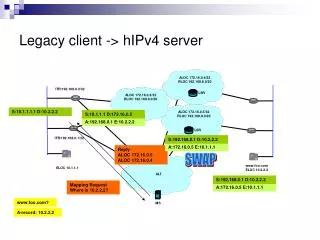
This document outlines the communication process between legacy clients and IPv4 servers, detailing request and response patterns, including address mapping and A-record retrieval for domains. It addresses issues of subflow management in Multipath TCP (MPTCP), demonstrating how addresses are swapped and how requests for A-records are resolved. The interactions are exemplified by numerous IP addresses and methodologies employed to enhance server-client transactions while maintaining connectivity within a complex network structure.

Legacy Client-Server Communication & MPTCP Subflow Management
E N D
Presentation Transcript
Legacy client -> hIPv4 server S:10.1.1.1.1 D:10.2.2.2 S:10.1.1.1 D:172.16.0.5 A:192.168.0.1 E:10.2.2.2 S:192.168.0.1 D:10.2.2.2 A:172.16.0.5 E:10.1.1.1 ReplyALOC 172.16.0.5ALOC 172.16.0.4 SWAP S:192.168.0.1 D:10.2.2.2 Mapping RequestWhere is 10.2.2.2? A:172.16.0.5 E:10.1.1.1 www.foo.com? A-record: 10.2.2.2
Legacy client -> hIPv4 server, return path S:10.2.2.2 D:192.168.0.1 S:10.2.2.2 D:10.1.1.1 S:10.2.2.2 D:192.168.0.1 A:172.16.0.5 E:10.1.1.1 A:172.16.0.5 E:10.1.1.1 S:10.1.1.1.1 D:10.2.2.2 S:10.1.1.1 D:172.16.0.5 A:192.168.0.1 E:10.2.2.2 S:10.2.2.2 D:192.168.0.1 A:172.16.0.5 E:10.1.1.1 S:192.168.0.1 D:10.2.2.2 A:172.16.0.5 E:10.1.1.1 ReplyALOC 172.16.0.5ALOC 172.16.0.4 SWAP S:192.168.0.1 D:10.2.2.2 Mapping RequestWhere is 10.2.2.2? A:172.16.0.5 E:10.1.1.1 www.foo.com? A-record: 10.2.2.2
Legacy client -> hIPv4 server, adding MPTCP subflow S:192.168.0.2 D:10.2.2.2 SWAP A:172.16.0.4 E:10.1.1.1 S:10.1.1.1 D:172.16.0.4 A:192.168.0.2 E:10.2.2.2 S:10.1.1.1.1 D:10.2.2.2 S:10.1.1.1 D:172.16.0.5 A:192.168.0.1 E:10.2.2.2 S:192.168.0.2 D:10.2.2.2 S:192.168.0.1 D:10.2.2.2 A:172.16.0.4 E:10.1.1.1 A:172.16.0.5 E:10.1.1.1 ReplyALOC 172.16.0.5ALOC 172.16.0.4 SWAP S:192.168.0.1 D:10.2.2.2 Mapping RequestWhere is 10.2.2.2? A:172.16.0.5 E:10.1.1.1 www.foo.com? A-record: 10.2.2.2
hIPv4 client -> legacy server S:10.2.2.2 D:10.1.1.1 www.foo.com? A-record: 10.1.1.1RLOC:192.168.0.1RLOC:192.168.0.2 S:10.2.2.2 D:192.168.0.1 A:172.16.0.5 E:10.1.1.1 S:10.2.2.2 D:192.168.0.1 A:172.16.0.5 E:10.1.1.1
hIPv4 client -> legacy server, return path SWAP S:10.1.1.1 D:172.16.0.5 S:10.1.1.1 D:10.2.2.2 A:192.168.0.1 E:10.2.2.2 S:192.168.0.1 D:10.2.2.2 S:10.2.2.2 D:10.1.1.1 www.foo.com? A:172.16.0.5 E:10.1.1.1 A-record: 10.1.1.1RLOC:192.168.0.1RLOC:192.168.0.2 S:10.2.2.2 D:192.168.0.1 A:172.16.0.5 E:10.1.1.1 S:10.2.2.2 D:192.168.0.1 A:172.16.0.5 E:10.1.1.1
hIPv4 client -> legacy server, adding MPTCP subflow S:10.2.2.2 D:192.168.0.2 A:172.16.0.4 E:10.1.1.1 S:10.2.2.2 D:192.168.0.2 A:172.16.0.4 E:10.1.1.1 S:10.2.2.2 D:10.1.1.1 www.foo.com? A-record: 10.1.1.1RLOC:192.168.0.1RLOC:192.168.0.2 S:10.2.2.2 D:192.168.0.1 A:172.16.0.5 E:10.1.1.1 S:10.2.2.2 D:192.168.0.1 A:172.16.0.5 E:10.1.1.1