Download
1 / 9
0 likes | 2 Vues
This guide explores practical ways to hire remote developers for sustainable business growth, covering key benefits, challenges, and long-term hiring strategies with insights from experienced global teams.

E N D
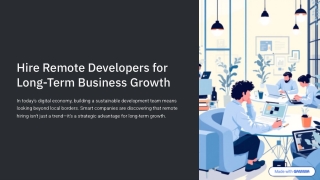
Hire Remote Developers for Long-Term Business Growth In today's digital economy, building a sustainable development team means looking beyond local borders. Smart companies are discovering that remote hiring isn't just a trend—it's a strategic advantage for long-term growth.
GROWTH STRATEGY Why Remote Hiring Supports Long-Term Growth Cost Efficiency That Scales Access to Global Expertise When you hire remote developers, you're not just cutting costs— you're reinvesting savings into product development. Office space, equipment, and local salary premiums can consume 40- 60% of your budget. Remote teams eliminate these overheads while maintaining quality. The best talent isn't concentrated in Silicon Valley anymore. Remote hiring opens doors to experienced developers in emerging tech hubs who bring specialized skills your local market may lack. This global talent pool becomes your competitive edge. Companies that embrace distributed development teams can scale faster without the infrastructure limits that constrain traditional hiring. You grow when opportunity strikes, not when real estate becomes available.
Strategic Benefits of Hiring Developers Remotely Operational Flexibility Talent Retention Time-Zone Advantages Remote teams adapt to changing business needs without relocation costs or lengthy onboarding. Scale up for launches, scale down between projects—all while maintaining core talent relationships. Developers value flexibility and autonomy. Remote positions attract professionals who prioritize work-life balance, leading to lower turnover and stronger long-term team stability. Distributed teams create natural coverage across business hours. What closes in New York opens in Bangalore, enabling round-the-clock progress without demanding unreasonable hours from anyone.
PRACTICAL INSIGHTS Common Challenges and How Businesses Manage Them Remote hiring isn't without obstacles, but experienced companies have developed practical solutions that work. Communication Gaps Quality Control Team Alignment Time zones and cultural differences can slow collaboration. Successful teams use asynchronous communication tools, establish clear documentation standards, and schedule overlapping hours for real- time discussions when needed. Distance doesn't mean disconnection. Regular code reviews, automated testing pipelines, and defined quality metrics ensure remote developers maintain the same standards as in-house teams. Shared goals require deliberate effort. Weekly video standups, quarterly planning sessions, and transparent project management keep everyone aligned on priorities and progress.
Best Practices for Sustainable Remote Developer Hiring Building a successful remote development team requires intentional processes that foster productivity and connection. 01 02 Establish Clear Hiring Processes Invest in Documentation Define role requirements, technical assessments, and cultural fit criteria before you hire remote developers. Structured evaluation prevents costly mismatches. Written guidelines for coding standards, deployment procedures, and communication protocols become your remote team's foundation. Good documentation reduces confusion and speeds onboarding. 03 Implement Performance Tracking Measure outcomes, not hours. Focus on deliverables, code quality, and problem- solving rather than monitoring activity. Trust builds stronger remote relationships.
The Role of Reliable Technology Partners Many businesses accelerate their remote hiring strategy by partnering with experienced development firms. These partnerships reduce risk while providing immediate access to vetted talent. What Partners Provide Companies like CnEL India specialize in building and managing remote development teams for international clients. With deep experience in distributed team models, they handle recruitment, infrastructure, and ongoing team management—letting you focus on product strategy rather than operational logistics. Pre-screened developer talent pools Established communication frameworks Local HR and compliance management Quality assurance processes This approach works particularly well for companies new to remote hiring or those expanding into new technical domains. An established partner brings processes, relationships, and local market knowledge that would take years to develop independently. Scalability without long-term commitments The key is choosing partners who understand your business goals, not just staffing quotas. Look for transparency, proven track records, and alignment with your development culture.
Building Your Remote Hiring Strategy 1 Define Requirements Map out technical skills, experience levels, and team structure needs before starting your search. 2 Choose Your Model Decide between direct hiring, contractor relationships, or partnering with development firms based on your capacity and goals. 3 Establish Infrastructure Set up communication tools, project management systems, and security protocols that support distributed work. 4 Start Small, Scale Smart Begin with a pilot team to refine your remote hiring process, then expand as you gain confidence and systems mature.
KEY TAKEAWAYS What Long-Term Success Looks Like 60% 3x 40% Cost Reduction Talent Pool Faster Scaling Average savings companies achieve through strategic remote hiring versus traditional in-house teams Expansion in available qualified candidates when hiring globally versus locally only Quicker team growth with remote developers compared to office-based hiring cycles These benefits compound over time. Companies that hire remote developers strategically gain flexibility that drives sustainable growth, while those clinging to office-only models face increasing constraints.
Making Informed Decisions About Remote Development The shift toward remote software developers reflects fundamental changes in how modern businesses operate. Geography no longer determines your access to talent, and physical offices no longer define productive work environments. Ready to Explore Remote Hiring? Focus on finding partners and processes that align with your business culture and growth timeline. The right remote development strategy becomes a competitive advantage that compounds over years, not quarters. Success with distributed development teams comes from treating remote hiring as a strategic capability rather than a cost-cutting tactic. Companies that invest in proper processes, maintain clear communication, and choose the right partners—whether direct hiring or working with firms like CnEL India— build resilient teams that drive long-term business value. The question isn't whether to hire remote developers, but how to do it effectively. Start with clear goals, learn from experienced practitioners, and build systems that scale with your ambitions. Your next breakthrough might come from talent you haven't met yet, working from places you've never been.





![[PDF] Free Download Whatever for Hire By RJ Blain](https://cdn4.slideserve.com/8016137/slide1-dt.jpg)