Layered Game Architecture
40 likes | 154 Vues
This paper explores a sophisticated layered architecture for game services, integrating authentication and billing mechanisms through a Virtual Network Operator (VNO). It emphasizes the importance of edge network capabilities, focusing on transcoding, mapping, and caching strategies to optimize user experience. The architecture consists of distinct layers: the terminal layer, game server layer, edge server layer, and virtual network layer. Additionally, it discusses quality of service (QoS) controls, load balancing, and location services, thereby establishing a holistic framework for modern gaming infrastructure.


Layered Game Architecture
E N D
Presentation Transcript
Layered Game Architecture Li Yin Joe Polastre Takashi Suzuki Noah Treuhaft
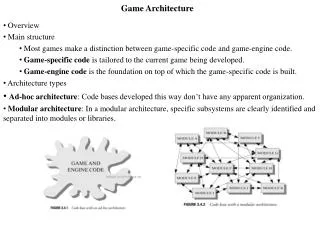
Game Service (Authentication & Billing through VNO) Edge Network (Transcoding, Mapping, Caching) Virtual Network (Authentication, Billing, Location) Physical (Access) Network Terminal
Game Portal Game Server Service Layer Edge Server Edge Network Layer VNO Portal Virtual Network Layer Physical Network Layer Terminal
Game portal • -Authentication (through VNO) • Billing (through VNO) • Player DB Game Server -QoS Control & Transcoding -Mapping & Load Balancing -Caching VNO portal -Authentication -Billing -Location Edge Server Edge Server Edge Server