Download
1 / 7
0 likes | 1 Vues
Learn coffee roast types light medium and dark and how they shape flavor. Choose the right roast with confidence. Read the guide now!<br>

E N D
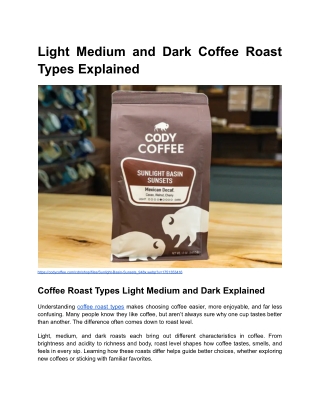
Light Medium and Dark Coffee Roast Types Explained https://codycoffee.com/cdn/shop/files/Sunlight-Basin-Sunsets_948x.webp?v=1751353416 Coffee Roast Types Light Medium and Dark Explained Understanding coffee roast types makes choosing coffee easier, more enjoyable, and far less confusing. Many people know they like coffee, but aren’t always sure why one cup tastes better than another. The difference often comes down to roast level. Light, medium, and dark roasts each bring out different characteristics in coffee. From brightness and acidity to richness and body, roast level shapes how coffee tastes, smells, and feels in every sip. Learning how these roasts differ helps guide better choices, whether exploring new coffees or sticking with familiar favorites.
This guide explains how roasting changes coffee, what each roast level tastes like, and how to choose the right roast based on personal preference. It also helps connect roast knowledge to real product selection at Cody Coffee, so choosing coffee feels informed rather than overwhelming. What Makes a Coffee Roast Different Coffee beans start as green seeds with very little aroma or flavor. Roasting is what transforms them into the rich, aromatic beans used for brewing. The difference between coffee roast types comes from time, temperature, and development during roasting. As beans roast, heat causes chemical reactions inside the bean: ● Natural sugars caramelize ● Acids change and mellow ● Oils move toward the surface ● Aromatic compounds develop Light roasts spend the least time in the roaster, preserving much of the bean’s original character. Medium roasts develop deeper sweetness and balance. Dark roasts roast long enough to emphasize bold, roasted flavors. Roast level affects more than just color. It influences: ● Flavor intensity ● Acidity level ● Body and mouthfeel ● Aroma strength Understanding these changes helps explain why two coffees made from similar beans can taste completely different. A clear grasp of coffee roast types also makes it easier to explore different options confidently instead of guessing. For those interested in sharpening flavor recognition, pairing this knowledge with a coffee tasting guide can deepen understanding of how roast level affects what’s experienced in the cup. Light Roast: Flavor Profile
Light roast coffee is all about clarity and origin character. These beans are roasted just long enough to develop flavor while preserving the bean’s natural qualities. Light roasts are typically light brown with a dry surface and no visible oils. Because the beans are not roasted as long, acidity remains more pronounced, creating a bright and lively cup. Common flavor notes include: ● Citrus and lemon ● Berry and stone fruit ● Floral and herbal tones The body of light roast coffee is lighter and cleaner, often described as crisp or tea-like. This makes light roasts especially appealing to those who enjoy subtle complexity rather than heavy richness. Light roasts perform best with brewing methods that allow control and clarity, such as pour-over, Chemex, or AeroPress. These methods highlight the delicate flavors rather than overpowering them. Within the roasts collection, light roast options are ideal for anyone curious about origin-forward coffee or looking to experience coffee beyond traditional bold profiles.
https://codycoffee.com/cdn/shop/files/Pilot_Peak_948x.webp?v=1751352538 Medium Roast: Flavor Profile Medium roast coffee offers balance. It combines the brightness of light roasts with the deeper sweetness that develops later in the roasting process. Beans are roasted to a medium brown color and may show a slight oil sheen. Acidity is present but softer, creating a smooth and approachable flavor profile. Typical medium roast flavors include: ● Caramel and brown sugar ● Chocolate and cocoa ● Toasted nuts ● Gentle fruit undertones
The body is medium and rounded, making this roast level comfortable and familiar. Medium roasts work well across a wide range of brewing methods, including drip machines, French press, and espresso-style brewing. Because of their versatility, medium roasts are often a great starting point when exploring different coffees. They appeal to a wide range of palates and offer consistency without sacrificing flavor complexity. Exploring medium roasts within the roasts collection allows for experimentation without moving too far toward brightness or intensity. Dark Roast: Flavor Profile Dark roast coffee is bold, rich, and intense. These beans are roasted longer, resulting in a darker color and visible oils on the surface. Extended roasting reduces acidity and emphasizes deep, roasted flavors. The result is a heavier body and a strong aroma that lingers. Dark roast flavor notes commonly include: ● Dark chocolate and cocoa ● Roasted nuts ● Smoky or spicy tones ● Caramelized sugar Because the roast flavor is dominant, the bean’s origin becomes less noticeable. Dark roasts are often chosen by those who enjoy strong coffee with a full mouthfeel and a lingering finish. This roast level pairs well with espresso machines and French press brewing, where the richness and body shine. Dark roasts are also popular for those who prefer low-acid coffee. Inside the roasts collection, dark roast options provide depth and intensity for drinkers who value boldness over brightness. How to Choose the Right Roast Choosing between light vs medium vs dark roast doesn’t require expertise. It starts with understanding taste preferences and brewing habits. Ask a few simple questions:
● Do bright, fruity flavors sound appealing? ● Is balance and smoothness more important? ● Does bold, rich coffee feel more satisfying? Light roasts suit those who enjoy crisp acidity and nuanced flavors. Medium roasts fit those seeking balance and versatility. Dark roasts appeal to anyone who prefers intensity and richness. Brewing method also matters. Lighter roasts benefit from slower extraction, while darker roasts thrive with immersion and pressure-based brewing. The best approach is exploration. Trying different roast levels builds confidence and helps define personal taste. Using a trusted roast collection makes it easier to compare options without guesswork. Pairing roast knowledge with a coffee tasting guide can also help identify what stands out in each cup. FAQs What is the difference between light, medium, and dark coffee roasts? The difference comes from roasting time and temperature. Light roasts preserve bright, origin-focused flavors. Medium roasts balance sweetness and acidity. Dark roasts are roasted longer, producing bold flavors and a heavier body with lower acidity. Is light roast coffee stronger than dark roast? Light roast coffee can taste stronger because of its bright acidity, but strength depends more on flavor than caffeine. When comparing light vs medium vs dark roast, caffeine levels are fairly similar when brewed the same way. Which coffee roast is best for beginners? Medium roast coffee is often the easiest place to start. It offers a smooth, balanced flavor that works well with most brewing methods and appeals to a wide range of taste preferences. Does dark roast coffee have less acidity? Yes, dark roast coffee typically has lower acidity. The longer roasting process reduces sharp acidic notes, creating a smoother and more mellow cup.
How do brewing methods affect coffee roast types? Different brewing methods highlight different roast qualities. Light roasts benefit from slow extraction, medium roasts are versatile, and dark roasts perform well with espresso and French press brewing. Summary & Next Steps Coffee roast types shape every aspect of coffee, from aroma and flavor to body and finish. When comparing light vs medium vs dark roast, each level offers a distinct experience. Light roasts highlight origin and brightness, medium roasts create balance and comfort, and dark roasts deliver bold, full-bodied intensity. Understanding these differences makes coffee selection easier and more enjoyable. Instead of guessing, choices become intentional and aligned with personal taste preferences. Next steps: ● Use this guide when comparing coffee options ● Explore different roast levels to refine preferences ● Learn more through a coffee tasting guide ● Browse the full roasts collection at Cody Coffee to find coffees that match taste and brewing style Knowing how coffee roast types work transforms coffee from a routine drink into a more rewarding experience, one cup at a time.