Neolithic Societies: Division of Labor and Social Hierarchy
100 likes | 214 Vues
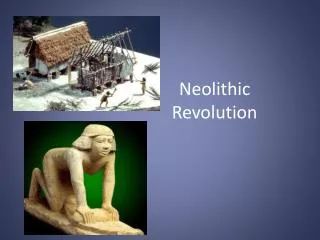
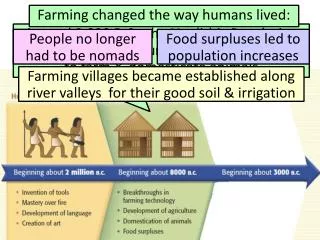
The Neolithic period marked a significant transformation in human societies, characterized by the division of labor, land clearing, and the advent of irrigation. As populations grew due to increased food production and livestock breeding, new skills and trades such as mining, weaving, and metallurgy emerged. Trade became essential, allowing the exchange of goods through bartering. Political power dynamics shifted, with strong councils and village councils emerging to coordinate community decisions. This era laid the groundwork for more complex social structures and interactions.


Neolithic Societies: Division of Labor and Social Hierarchy
E N D
Presentation Transcript
Pg 17-19 summary Neolithic peoples continued
Division of Labour: The way tasks are divided between members of a society. Land Clearing: Destruction of the natural vegetation to make the land ready to plant . Terms
Irrigation: Way to water the land. Social Hierarchy: Order within a social group, from most important to least important. Terms
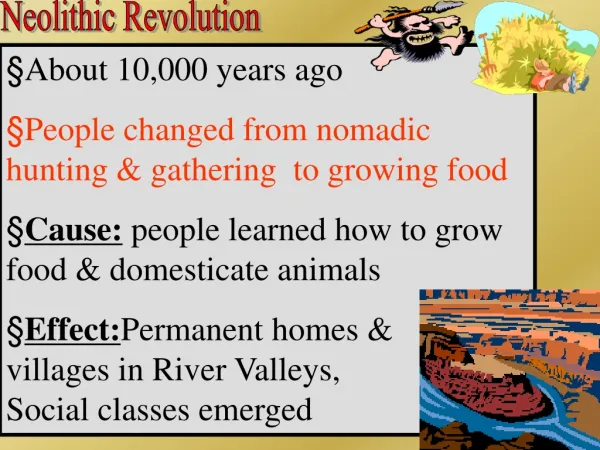
1)Population increased! Why? More food, livestock and breeding. 2) New skills and trades: Mining Weaving Metallurgy (making tools) War No longer doing tasks just related to food What new things happened in the Neolithic period?
3)Trade: Trading goods you have for something you do not. Also called bartering. Ex. Trade food for tools 4) Political Power: Coordinating how to organize people and goods. What new things happened in Neolithic period
Strong council: One leader advised by family and friends controls the village Village Council: The community makes the decision together Strong Council vs Village council