Stress*
Stress is a multifaceted response encompassing emotional and physical factors that vary by individual perception. This overview debunks six common myths about stress, highlighting that it is not universally harmful, and effective management is crucial. Major life changes such as death, divorce, and job loss are significant stressors. We explore practical strategies for managing stress, emphasizing the need for personalized approaches over one-size-fits-all solutions. Prioritizing self-care and being proactive can mitigate stress effects and enhance well-being.

Stress*
E N D
Presentation Transcript
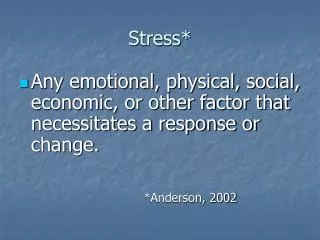
Stress* • Any emotional, physical, social, economic, or other factor that necessitates a response or change. *Anderson, 2002
Six Myths About Stress* • Myth 1: Stress is the same for everyone. Stress is different for each of us and depends on perception and response. • Myth 2: Stress is always bad for you. Managed stress (arousal) makes us productive and happy. Mismanaged stress can hurt or even prove to be lethal. • Myth 3: Stress is everywhere, so you can’t do anything about it. Effective planning of Life’s priorities precludes stress from becoming overwhleming. • Myth 4: The most popular techniques for reducing stress are best. No Universally effective stress reduction techniques exists. Only a comprehensive program tailored to the individual is effective. • Myth 5: No symptoms, no stress. An absense of stress symptoms does not equate to an absence of stress, and covering of symptoms with medication could negate important physicogical warning signs. • Myth 6: Only major symptoms of stress require attention. Minor symptoms of stress are early signals that actions should be taken to better manage stress.
Death of a spouse Divorce Marital separation Jail term Death of a close family member Personal injury or illness Marriage Dismissal from work Marital reconciliation Retirement Change in health of family member Pregnancy Twelve Greatest Causes of Stress
Stress Assessment* Death of spouse (100) Divorce (73) Martial separation (65) Jail term (63) Death of close family member (63) Marriage (50) Getting fired (47) Marital reconciliation (45) Retirement (45) Change in family member’s health (44) Death of a close friend (37) New line of work (36) Change in financial status (35) Change in number of arguments (35) ( ) = stress points or “life change units” Respondents with scores of 300+ fell seriously ill within 12 months following test. Mortgage loan (31) Foreclosure (30) Change in work responsibilities (29) Son or daughter leaving home (29) Trouble with in-laws (29) Spouse begins or stops work (26) Change in living conditions (25) Trouble with boss (23) Change in work hrs. or conditions (20) Change in residence (20) Auto loan or other small loan (17) Change in sleeping habits (16) Holiday season (12) Minor traffic violation (11) * Drs. Thomas Holmes & Richard Rahe, US Navy
Get up a little earlier Write things down Restrict use of caffeine Don’t procrastinate Plan ahead Fix whatever’s been bugging you! Have contingency plans Relax your standards Try saying “NO” Put more order in your life. Simplify Select an environment in concert with your personal needs and desires Learn to delegate Take a break! Learn to welcome change! Count your blessings! For each problem, there are probably 10 to 30 or 50 blessings! Turn “needs” into “preferences” Get plenty of sleep Try relaxing techniques Live “one day at a time” Do something you really enjoy everyday Focus Add a little love to whatever you do Stop destructive self-talk Allow time for yourself Be an optimist Do something nice for someone else Forgive, then forget! Some Proven Stress Reducers
Dangers Of Stress In Aviation • Impaired Judgment & decision making. • Reduces ability to fight off illness. • Reduces alertness/increased reaction time. • Loss of situational awareness. • Fixation/Inattention • Compromised performance • Loss of initiative/indifference.
A great time to relax is when you don’t have time for it- Sydney Harris
Aircraft MaintenanceTechnical Operations Human FactorsRoger Hughes, Manager