Download
1 / 3
0 likes | 0 Vues
Washer Drain Backup: Understanding the Causes and Costs of Overflow Issues As of April 2024, roughly 38% of homeowners who experience washer drain backup struggle to identify the root cause on their own

E N D
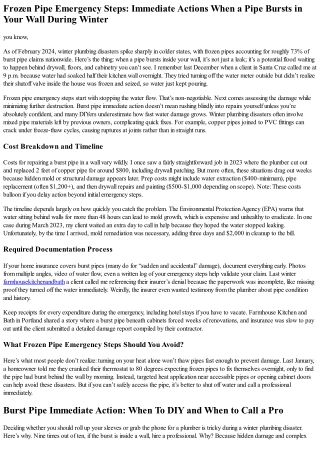
Frozen Pipe Emergency Steps: Immediate Actions When a Pipe Bursts in Your Wall During Winter you know, As of February 2024, winter plumbing disasters spike sharply in colder states, with frozen pipes accounting for roughly 73% of burst pipe claims nationwide. Here’s the thing: when a pipe bursts inside your wall, it’s not just a leak; it’s a potential flood waiting to happen behind drywall, floors, and cabinetry you can’t see. I remember last December when a client in Santa Cruz called me at 9 p.m. because water had soaked half their kitchen wall overnight. They tried turning off the water meter outside but didn’t realize their shutoff valve inside the house was frozen and seized, so water just kept pouring. Frozen pipe emergency steps start with stopping the water flow. That’s non-negotiable. Next comes assessing the damage while minimizing further destruction. Burst pipe immediate action doesn’t mean rushing blindly into repairs yourself unless you’re absolutely confident, and many DIYers underestimate how fast water damage grows. Winter plumbing disasters often involve mixed pipe materials left by previous owners, complicating quick fixes. For example, copper pipes joined to PVC fittings can crack under freeze-thaw cycles, causing ruptures at joints rather than in straight runs. Cost Breakdown and Timeline Costs for repairing a burst pipe in a wall vary wildly. I once saw a fairly straightforward job in 2023 where the plumber cut out and replaced 2 feet of copper pipe for around $800, including drywall patching. But more often, these situations drag out weeks because hidden mold or structural damage appears later. Prep costs might include water extraction ($400-minimum), pipe replacement (often $1,200+), and then drywall repairs and painting ($500-$1,000 depending on scope). Note: These costs balloon if you delay action beyond initial emergency steps. The timeline depends largely on how quickly you catch the problem. The Environmental Protection Agency (EPA) warns that water sitting behind walls for more than 48 hours can lead to mold growth, which is expensive and unhealthy to eradicate. In one case during March 2023, my client waited an extra day to call in help because they hoped the water stopped leaking. Unfortunately, by the time I arrived, mold remediation was necessary, adding three days and $2,000 in cleanup to the bill. Required Documentation Process If your home insurance covers burst pipes (many do for “sudden and accidental” damage), document everything early. Photos from multiple angles, video of water flow, even a written log of your emergency steps help validate your claim. Last winter farmhousekitchenandbath a client called me referencing their insurer’s denial because the paperwork was incomplete, like missing proof they turned off the water immediately. Weirdly, the insurer even wanted testimony from the plumber about pipe condition and history. Keep receipts for every expenditure during the emergency, including hotel stays if you have to vacate. Farmhouse Kitchen and Bath in Portland shared a story where a burst pipe beneath cabinets forced weeks of renovations, and insurance was slow to pay out until the client submitted a detailed damage report compiled by their contractor. What Frozen Pipe Emergency Steps Should You Avoid? Here’s what most people don’t realize: turning on your heat alone won’t thaw pipes fast enough to prevent damage. Last January, a homeowner told me they cranked their thermostat to 80 degrees expecting frozen pipes to fix themselves overnight, only to find the pipe had burst behind the wall by morning. Instead, targeted heat application near accessible pipes or opening cabinet doors can help avoid these disasters. But if you can’t safely access the pipe, it’s better to shut off water and call a professional immediately. Burst Pipe Immediate Action: When To DIY and When to Call a Pro Deciding whether you should roll up your sleeves or grab the phone for a plumber is tricky during a winter plumbing disaster. Here’s why. Nine times out of ten, if the burst is inside a wall, hire a professional. Why? Because hidden damage and complex
plumbing networks often elude even experienced DIYers. In my experience, the biggest DIY mistake is underestimating the difficulty of access and pipe compatibility. That said, not all burst pipe immediate actions require pros right away. Here’s a quick list of when you might DIY first: Locate and shut off the water supply quickly. This step is critical yet simple. Your main valve might be outside or in the basement. But a caveat: sometimes, shutoff valves freeze or corrode and won’t budge; forcing them risks breaking the valve, so stop and call a plumber if you face resistance. Contain water leaks using towels or buckets. This is oddly effective for a short period to prevent flooding your floors. However, it’s a band-aid, not a fix, avoid ignoring the problem hoping it will dry out on its own. Attempt thawing accessible frozen pipes. Using hair dryers or heating pads gently might help in areas like under sinks. Warning: never use open flames or high-heat devices, and if you smell gas, stop immediately and evacuate the home. Against this, if you notice bubbling or cracking sounds inside walls, visible water stains growing quickly, or the pipe breakage is extensive, you should call a pro immediately. Anytime Plumbing, serving the Santa Cruz area, recommends calling within the first hour of discovering a burst pipe to avoid massive water damage and mold. Also, repairs involving mixed pipe materials, typical in older homes with decades of mismatched fixes, require expertise to prevent improper patch jobs that fail repeatedly. Pipe Material and Age Impact on Burst Pipe Repairs Older homes often have a nightmare under their walls. I’ve seen copper, galvanized steel, PVC, and even polybutylene pipes all crammed into the same run, creating corrosion and pressure issues. That alone justifies hiring a pro. Farmhouse Kitchen and Bath’s lead plumber recently told me mixed materials can cause galvanic corrosion, which speeds pipe degradation unpredictably. When Is Burst Pipe Immediate Action Safe as a DIY? Honestly, if you’re comfortable with basic plumbing, it goes beyond tightening a valve or replacing a simple faucet, and the leak is accessible, minimal, and isolated, then a DIY fix might make sense. But here’s the catch: even then, prolonged freezing temperatures can cause hidden fractures, so test your fix extensively. Winter Plumbing Disaster: Practical Steps to Manage and Prevent Pipe Bursts Winter plumbing disasters like burst pipes are some of the costliest a homeowner faces, but prevention and swift action can soften the blow. Let me walk you through key practical steps I recommend based on my own basement flooding mishaps and client calls during cold snaps. First, identify vulnerable spots in your plumbing system. Is your water heater’s line insulated? How about pipes running through external walls or crawl spaces? Last winter, I inspected a house where decades of neglected insulation and disliked lighting fixtures in the basement meant the pipes were exposed to freezing drafts. The resulting freeze-thaw cycles without proper wrapping led to the burst. Next, remember this: preventive insulation is cheaper than emergency repairs by at least a factor of five. The EPA suggests using foam sleeves around pipes in unheated areas; cost runs around $10-$15 per 6-foot sleeve, a tiny price compared to thousands in burst pipe repairs. Also, consider turning your thermostat down but never off during freezing weather, an oversight I made in 2019 that cost me two flooded rooms. Here's a practical aside: opening cabinet doors where water pipes run can keep warm air circulating right where you need it. You don’t need fancy gadgets for this. A simple kitchen warming trick I picked up saves homeowners on pricey service calls. Finally, schedule regular servicing of your plumbing by trusted companies like Anytime Plumbing, especially if your house has a history of “stop-gap” fixes from past owners. They offer inspections to identify weak points and recommend targeted upgrades, like replacing polybutylene pipes that are known ticking time bombs in winter. Common Mistakes When Handling Winter Plumbing Disasters
Here’s what often goes wrong: Ignoring small drips until the big one hits. Don’t wait for that loud crack or wet wall paint to act. Early detection matters. Attempting complex plumbing patches without the right tools. A quick fix might void your insurance or worsen the issue. Failing to document the incident immediately. This delays remediation funds and repairs. Winter Plumbing Disaster Advanced Insights: Emerging Trends and What to Expect Looking ahead, there are some notable trends to watch in winter plumbing disaster management in 2024 and beyond. Smart home water monitoring systems are gaining momentum, these devices alert homeowners instantly when a drop in pressure or unusual flow occurs, allowing for earlier intervention. However, the jury’s still out on their affordability and long-term reliability. I’ve seen mixed reviews from clients about these tech products, which can cost anywhere from $250 to $600 installed, but may save thousands in emergency repairs. Another trend is the rising use of alternative pipe materials like PEX (cross-linked polyethylene), which is more freeze-resistant and flexible than copper or PVC. It’s surprising how many contractors don’t recommend retrofitting older homes due to cost. Yet, Farmhouse Kitchen and Bath is starting to advise this as a smart upgrade during renovations, especially when paired with insulation improvements. 2024-2025 Program Updates on Plumbing Codes States like California and Oregon introduced updated plumbing codes in 2023 focusing on winter preparedness and pipe insulation requirements. For example, new mandates require at least R-3 insulation on pipes in unheated areas, with penalties if ignored during major renovations. Homeowners renovating older houses with decades of mismatched repairs often find these laws confusing and costly but essential for long-term investment protection. Tax Implications and Planning for Plumbing Repairs Here’s a twist many don’t expect: some major plumbing repairs related to unexpected damage may qualify for home improvement tax credits or deductions, especially under energy efficiency upgrades linked to pipe insulation. Talk to a tax advisor before undertaking costly repairs, because the paperwork can get complicated, and qualifying expenses are narrowly defined. Also, maintaining accurate invoices and contractor certifications is key. Look, ignoring these plumbing upgrade requirements won't make water damage go away. A winter plumbing disaster might seem like a budget blow, but smart planning turns it into manageable maintenance. First, check your water shutoff valve and test it every six months to ensure it works smoothly, this simple step can avoid hours of flooding. Whatever you do, don’t delay calling a licensed plumber when you detect a burst pipe in your wall. Waiting games often lead to ugly surprises, so keep your emergency contact list handy and consider a professional inspection after any cold snap. That way, you’ll be ready not just to react but to prevent the next winter plumbing disaster before it starts.