Timing Belts Applications and Advantages
0 likes | 11 Vues
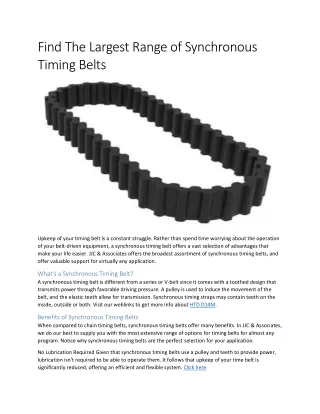
A timing belt is a rubber belt with teeth utilized in engines to maintain the engine components shifting at the right time. It connects the crankshaft and camshaft so the engine runs easily. This belt is mainly utilized in motors, bikes, and a few machines to help the engine paintings well.


Timing Belts Applications and Advantages
E N D
Presentation Transcript
Timing Belts: Applications and Advantages Timing belts are required for particular, aligned, and powerful motion switches among shafts within the discipline of mechanical energy transmission. Timing belts are vital components of conveyor structures, car engines, and industrial machinery for efficient and well-coordinated operations. Applications of Timing Belts Because of their reliability and flexibility, timing belts are utilized in a huge variety of sectors. Automotive engines: Camshaft-to-crankshaft synchronization is one of the commonplace uses. 1. Conveyor Systems: Used in the business, packaging, and food industries. 2. Textile Machines: For synchronized material processing. 3. Printing machinery: To guarantee correct ink deposition and paper feed.
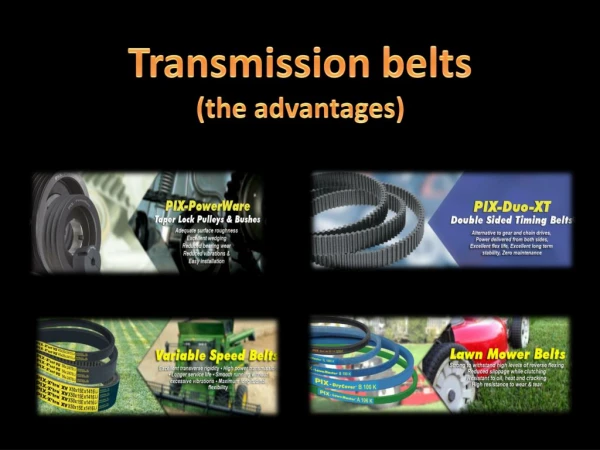
4. Automation and robotics: For correct positioning and motion control. 5. CNC machines: For unique tool copying and axis movement. Advantages of Timing Belts 1. Accurate Chronization: No slippage guarantees precise movement and timing. 2. Minimal Upkeep: Minimizes maintenance expenses and downtime by requiring little to no lubrication. 3.Silent Operation: operates silently and with little vibration. 4. High Effectiveness: Transmits power with little waste of energy. 5. Long-lasting and resilient: Resistant to chemicals, damage, and oil, particularly PU belts. 6. Adaptable Installation: Available in adjustable lengths and different profiles (T5, T10, AT5, AT10). For any further information on timing belts, their specific applications, or any related inquiries, please don't hesitate to reach out to Dynamic Industrials.