carbon nanotubes catch cancer
130 likes | 246 Vues
This article explores groundbreaking advancements in cancer detection using carbon nanotubes. With over 100 types of cancer responsible for millions of deaths yearly, early detection is vital. Traditional methods rely on screening tests, but the new approach utilizing carbon nanotubes promises to enhance efficiency substantially. Serving as highly sensitive platforms, these nanotubes can isolate circulating tumor cells from blood samples, offering the potential for improved diagnostics, including identifying various diseases like HIV. Discover how this innovation could revolutionize cancer diagnostics.


carbon nanotubes catch cancer
E N D
Presentation Transcript
carbon nanotubes catch cancer By: John Rawls
Facts About Cancer • There are over 100 types of Cancer • Over 7 million deaths a year (2004) • Makes up over 13% of the world’s deaths each year • The disease can affect all parts of the body
Common Types • The top five in Men: • Lung • Stomach • Liver • Colorectal • Oesophagus • The top five in Women: • Breast • Lung • Stomach • Colorectal • Cervical
How do you know? • Tests are called screenings • Different types: • Physical Exam • Laboratory Tests • Imagining Procedures • Genetic Tests • Finding Cancer early can save lives
Laboratory Tests • Circulating tumor cells • About 90% of cancer related deaths are not due to the original site of the cancer • Important to find these traveling cancerous cells • Usually only several cells per 1-milliliter sample of blood, which can contain tens of billions of normal blood cells
Previous Method • Blood is taken from the patient • Passed over thousands of silicon “posts” • Antibodies coat the outside of silicon • Not too efficient given the amount of cells • Scientists look for more efficient strategy
Nanotubes • http://www.youtube.com/watch?v=zQAK4xxPGfM • Understanding of Carbon Nanotubes
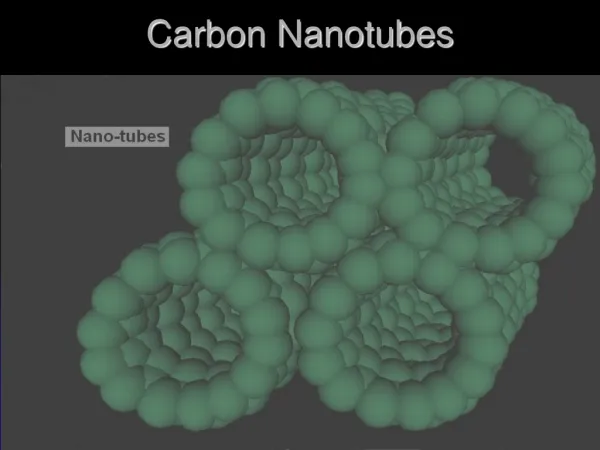
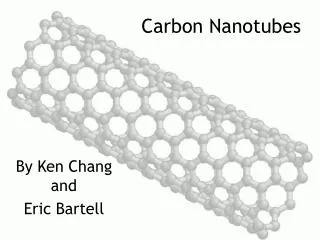
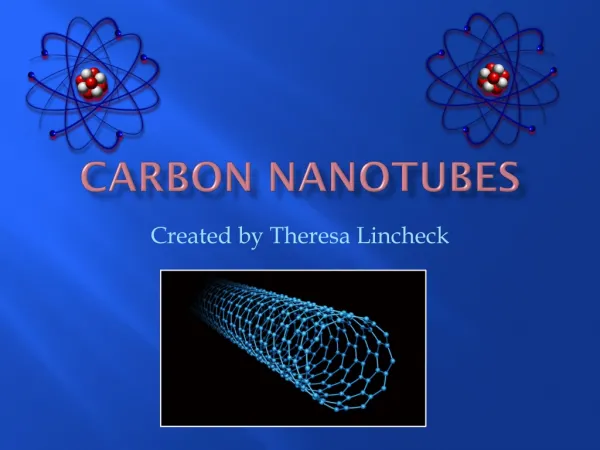
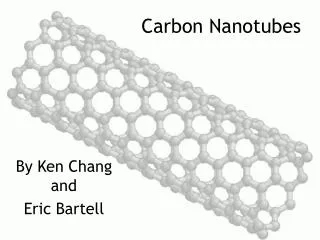
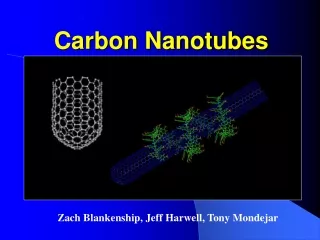
Carbon Nanotubes • About 8 times more efficient • 10 billion to 100 billion carbon nanotubes per square centimeter • Less than 1% carbon and 99% air • Easy to flow through
The Future • Can change the Geometry • Tumor cells, about a micron in diameter, down to viruses, which are only 40 nm • Possibly able to test for HIV • Leads are forming for handheld devices • Lead to more availability • Better diagnostics • Location?
Refrences • http://www.sciencedaily.com/releases/2011/03/110329134134.htm • http://www.who.int/features/factfiles/cancer/02_en.html • http://www.cancer.gov/cancertopics/cancerlibrary/what-is-cancer • http://www.cancer.gov/PublishedContent/Images/images/documents/cancer4-new.jpg
Refrences (cont.) • http://www.ne2ss.org/wp-content/uploads/2008/09/cancer_biology.jpg • http://nsnc.sdsmt.edu/images/carbonNanotubes2um.jpg