The Electromagnetic Spectrum
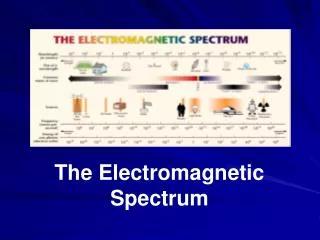
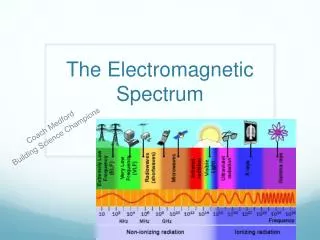
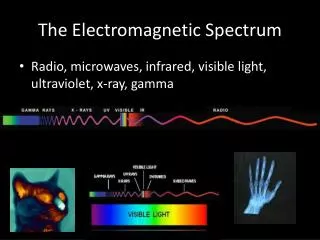
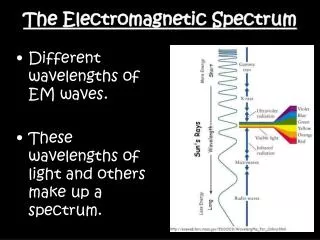
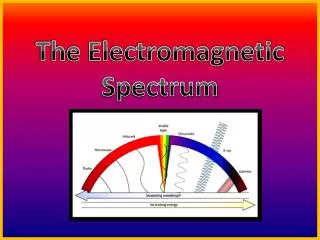
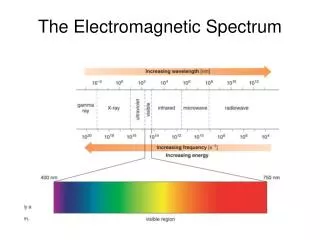
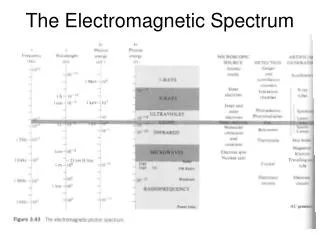
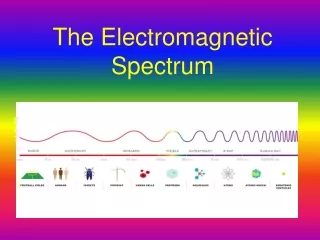
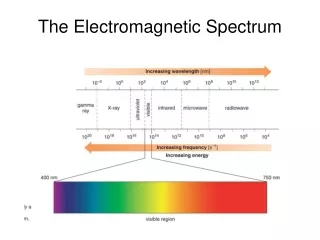
The electromagnetic spectrum encompasses a range of waves, each with unique properties and applications. Light and radio waves possess the longest wavelengths, while gamma rays have the shortest and most energy-rich wavelengths. This spectrum includes microwaves, used in cooking and radar; infrared waves, essential for remote controls and heat detection; visible light, the only part we see; ultraviolet waves that can cause sunburns; X-rays for medical imaging; and gamma rays used in cancer treatment. Understanding these waves is crucial in various scientific and practical fields.

The Electromagnetic Spectrum
E N D
Presentation Transcript
Radio Waves • Longest wavelength • Frequency? • Energy? • Uses: Cell phones, Music
Microwaves • Shorter wavelength than radio • Frequency? • Energy? • Uses: heating food, Doppler radar
Infrared Waves • Both long and short wavelengths • Energy? • Uses: Remotes, “heat waves”
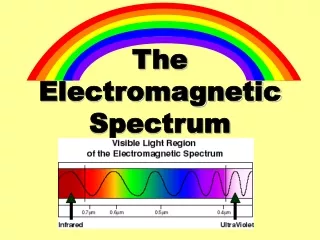
Visible Light • Only EM waves we can see • Each color has a different wavelength • Red longest, Violet shortest • Combine to make white light • Energy?
Ultraviolet Waves • Short wavelengths • Invisible to humans • Causes sunburns, DNA mutations
X-Rays • Smaller wavelength than U.V • Energy? • Pass easily through some solids, skin • Damaging to cells – DNA • Uses: medical, airports
Gamma Rays • Smallest wavelength • Energy? • Made by radioactive atoms • Can kill living cells • Uses: medical to kill diseased cells