Effective Presentation Templates for Priority Research Directions in Extreme Conditions
10 likes | 120 Vues
This document provides guidelines for creating effective presentation templates for workshops on Priority Research Directions (PRDs) related to scientific challenges in materials under extreme conditions. The templates aim to facilitate panel discussions, aid in report writing, and communicate results to the community. Introductions should highlight technological challenges, while PRDs must inspire creativity and be relevant for proposal requests a decade ahead. The presentations serve as the foundation for the final workshop report, promoting revolutionary breakthroughs in basic research.


Effective Presentation Templates for Priority Research Directions in Extreme Conditions
E N D
Presentation Transcript
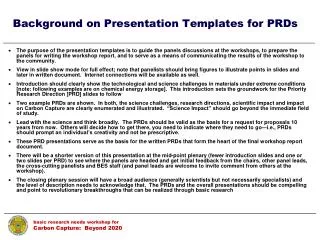
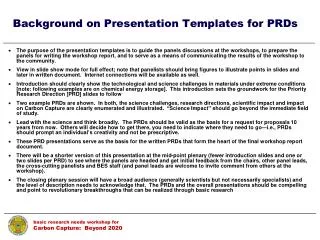
Background on Presentation Templates for PRDs • The purpose of the presentation templates is to guide the panels discussions at the workshops, to prepare the panels for writing the workshop report, and to serve as a means of communicating the results of the workshop to the community. • View in slide show mode for full effect; note that panelists should bring figures to illustrate points in slides and later in written document. Internet connections will be available as well. • Introduction should clearly show the technological and science challenges in materials under extreme conditions [note: following examples are on chemical energy storage]. This introduction sets the groundwork for the Priority Research Direction [PRD] slides to follow • Two example PRDs are shown. In both, the science challenges, research directions, scientific impact and impact on Carbon Capture are clearly enumerated and illustrated. “Science Impact” should go beyond the immediate field of study. • Lead with the science and think broadly. The PRDs should be valid as the basis for a request for proposals 10 years from now. Others will decide how to get there, you need to indicate where they need to go—i.e., PRDs should prompt an individual’s creativity and not be prescriptive. • These PRD presentations serve as the basis for the written PRDs that form the heart of the final workshop report document. • There will be a shorter version of this presentation at the mid-point plenary (fewer introduction slides and one or two slides per PRD) to see where the panels are headed and get initial feedback from the chairs, other panel leads, the cross-cutting panelists and BES staff (and panel leads are welcome to invite comment from others at the workshop). • The closing plenary session will have a broad audience (generally scientists but not necessarily specialists) and the level of description needs to acknowledge that. The PRDs and the overall presentations should be compelling and point to revolutionary breakthroughs that can be realized through basic research