Enhancing Group Decision-Making: Overcoming Cognitive Biases and Groupthink
Groups are often called upon to solve complex problems and make important decisions. While they can harness collective knowledge for enhanced outcomes, they also face pitfalls like groupthink and shared information bias that can lead to poor choices. Understanding the dynamics of group decision-making can improve effectiveness. This guide explores why groups sometimes make riskier decisions than individuals, how to recognize and mitigate groupthink, and strategies for fostering constructive dialogue and sound decision-making processes within teams.

Enhancing Group Decision-Making: Overcoming Cognitive Biases and Groupthink
E N D
Presentation Transcript
11 Decision Making People turn to groups when they must solve problems and make decisions. Groups often make better decisions than individuals, for groups can process more information more thoroughly. But groups, like individuals, sometimes make mistakes. When a group sacrifices rationality in its pursuit of unity, the decisions it makes can yield calamitous consequences. • Why make decisions in groups? • What problems undermine the effectiveness of decision making in groups? • Why do groups make riskier decisions than individuals? • What is groupthink, and how can it be prevented?
The mob has no judgment, no discretion, no direction, no discrimination, no consistency. Cicero madness is the exception in individuals but the rule in groups. Nietzsche When "a 100 clever heads join a group, one big nincompoop is the result.” Carl Jung Decision Making in Groups
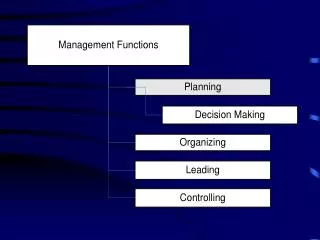
Orientation Defining the Problem Planning the Process Discussion Decision No Decision Reached Decision Reached Implementation Functional Model of Decision Making Orientation Orientation • Development of shared mental model • Tendency to skip this step
Remembering Information Discussion Exchanging Information Processing Information
Decision: Social decision schemes Decision
Implementation Decision Reached Implementation • Evaluating the decision • Adhering to the decision: Coch and French (1948) • Vroom’s normative model of decision making Evaluating the Decision Adhering to the Decision
Denver Airport Enron Abilene paradox 1.7 billion – 300 million Which is not to say that groups always make good decisions
What Problems Undermine the Effectiveness of Decision-Making Groups?
Shared Information Bias Oversampling shared information leads to poorer decisions when a hidden profile would be revealed by considering the unshared information more closely Causes • Informational influence • Normative influence • Emphasis on consensus vs. correctness • Initial preferences • Impression management goals
Reducing the Shared Information Bias The SIB can be reduced by improving information exchange by: • Good leadership • Increasing diversity • Using a GDSS (group decision support system) Discussion
Polarization and Risk • Group polarization: A shift in the direction of greater extremity in individuals' responses
Janis’s Theory of Groupthink Kennedy’s advisory group planning the Bay of Pigs “covert op”
Symptoms Abilene paradox Sunk costs