Sustain Curriculum Mapping
Discover how to continue, expand, and refine your curriculum mapping process with our comprehensive guide. This resource outlines essential tools, such as the Curriculum Mapping Tool Belt, which organizes and supports student achievement through effective alignment of standards, skills, and assessments. By fostering collaboration among educators and integrating authentic learning questions, curriculum mapping can transform teaching practices and facilitate continuous improvement. Explore ways to ensure that your curriculum reflects both reality and vision, enhancing overall educational outcomes.

Sustain Curriculum Mapping
E N D
Presentation Transcript
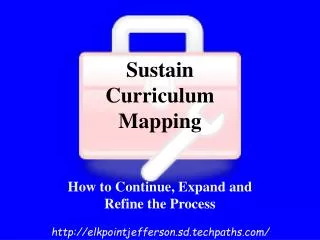
SustainCurriculum Mapping How to Continue, Expand and Refine the Process http://elkpointjefferson.sd.techpaths.com/
Curriculum Mapping Tool Belt • The belt is the calendar that organizes the tools. • The belt buckle allows for adjustable pacing throughout the school year. • The content hammers in the standards—the nails.
Tool Belt • The mapping tool drills in essential questions for authentic probing and learning. • The pliers (skills) hold the content, standards, and assessments together. • The screwdriver turns content into knowledge. • The measuring tape can be used to assess student buildings (projects).
Managing Change • Review your plan relating to curriculum mapping. • Check for vision, skills, incentives, resources, and action plan. • Find creative ways to accomplish the ultimate goal of designing a curriculum map that supports student achievement.
Mapping Supports Continuous Improvement • Aligns Relevant Standards • Supports Effective Instruction • Provides Meaningful Reporting • Aligns with Assessments
Why are we doing curriculum mapping? Improved curriculum communication Opportunity to view a teacher’s curricula …..With curriculum mapping, a school doesn’t begin with the end in mind and then make changes to bring about that end. It begins with reality and builds toward vision.
How can curriculum mapping benefit a school district? The tremendous value of mapping is that educators at a site can edit, review, validate and develop curriculum and assessment with confidence and in context. Individual teachers can build on previous years with more authenticity and better prepare students for the future. This aids in supporting effective interdisciplinary unit development and supporting alignment of assessments and skills to standards. Bena Kalik, 2005
Contact Information • Education Service Agency, Region 2 • Pat Bruinsma Pat Hubert Lori Stoltenburg • Marge Hauser Vickie Venhuizen East Dakota Cooperative (605) 367-7680 esa2@edec.org www.edec.org/esa