Safety Symbols
Safety Symbols. Labels on Hazardous Products. HHPS and WHMIS Symbols. Household Hazardous Product Symbols (HHPS). Many products used in our homes may be dangerous if used incorrectly.

Safety Symbols
E N D
Presentation Transcript
Labels on Hazardous Products HHPS and WHMIS Symbols
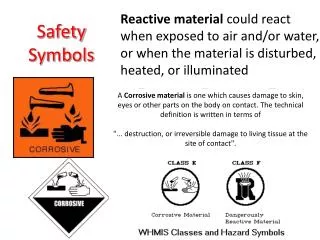
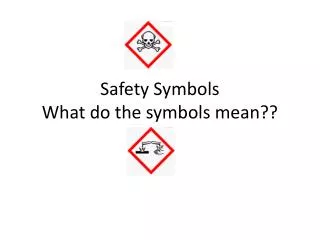
Household Hazardous Product Symbols (HHPS) • Many products used in our homes may be dangerous if used incorrectly. • For this reason, household products are marked with symbols that allow us to recognize and interpret potential hazards
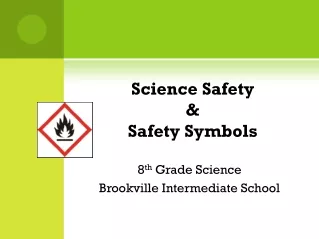
Each Symbol has two components: Shape determines the danger
Border indicates whether hazard is in the container or the contents:
What is it for? • symbols for hazardous products in the workplace. • identify a wider range of hazards than HHPS symbols
WHMIS LABELS • Alert the user to the hazards of the product • State what precautions to take when handling the product. • Refer the user to a material safety data sheet (MSDS) for more detailed information about the product.
Disposing of Hazardous Waste • Hazardous waste cannot be disposed like normal trash in landfills. • Examples: • Automotive products (antifreeze, fluids, motor oils, and gasoline). • Batteries • Fluorescent light bulbs. (Many of the older models contain mercury) • Household cleaners. (ammonia, drain cleaner, and rust remover.) • Paint products. • Garden chemicals (weed killers, insecticide) • Swimming pool chemicals
Disposing of Hazardous Waste • Locate a drop-off facility • Reduce and Recycle • Use non-hazardous materials whenever possible Example: Instead of using a chemical drain cleaner, use strainers to catch the debris that may clog your pipes. Flush your drains weekly with hot water or warm vinegar. Use baking soda and a steel wool pad instead of using intense counter top cleaners. • Consider using non-aerosol products like those with pump sprays. Instead of using an aerosol air-cleaner, keep an open box of baking soda in a room or create potpourri out of scrap orange peels