Sustainable Cotton T-Shirt Production: A Step-by-Step Approach
40 likes | 166 Vues
This guide outlines a sustainable approach to cotton T-shirt production through three key stages. Step 1 focuses on the cotton plant's growth, emphasizing reduced pesticide use, water conservation, and land preservation. Step 2 addresses the manufacturing process, highlighting workers' welfare, toxicity of fabric coatings, and the importance of washing fabrics at lower temperatures. Step 3 considers design and shipping, stressing fair labor practices, minimal packaging, eco-friendly transport, and promoting longevity to prevent landfill waste.


Sustainable Cotton T-Shirt Production: A Step-by-Step Approach
E N D
Presentation Transcript
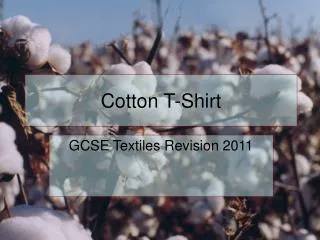
Cotton T-Shirt GCSE Textiles Revision 2011
Step 1 • The first stage is the growth of the cotton plant. • When growing it you could consider minimising the use of pesticides (not only for the o zone layer, but also for the well being of the people tending the cotton plants), reducing the amount of water consumption (preserving the earths resources) and perhaps reducing the amount of tended land used to grow the cotton on.
Step 2 • In terms of manufacturing the actual fabric, you could consider the wellbeing of the often exploited people that work in cotton mills, consider the coatings used to protect the fabric and their toxicity, and you could also consider perhaps making the fabric so it could be washed on a lower temperature wash when it is eventually bought and used (again to conserve resources)
Step 3 • In terms of the design of the T shirt and shipping - considering the wellbeing of those that work in sweatshops, consider how much unnecessary packaging is used, and the environmentally friendly methods of transporting the product around the globe, how the T shirt is sold in shops and also the use of it once the consumer buys it - how to stop that T shirt ending up on a landfill (i.e the idea of 'design longevity')