Exploring English Poetry's Rhythms and Meters
Learn about the fundamental rhythms and meters in English poetry, from iambic to dactylic, and their varying syllabic patterns and structures.

Exploring English Poetry's Rhythms and Meters
E N D
Presentation Transcript
Rhythm and Meter in English PoetryEnglish poetry employs five basic rhythms of varying stressed (/) and unstressed (x) syllables. • Each unit of rhythm is called a "foot" of poetry
The meters are • iambic • trochaic • spondaic • anapestic • dactylic
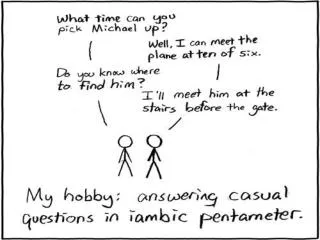
Two syllable feet • IAMBIC (x /) : That time of year thou mayst in me behold • TROCHAIC (/ x): Tell me not in mournful numbers • SPONDAIC (/ /): Break, break,
Meters with three-syllable feet • ANAPESTIC (x x /): And the sound of a voice that is still • DACTYLIC (/ x x): This is the forest primeval, the murmuring pines and the hemlock (a trochee replaces the final dactyl)
Each line of a poem contains a certain number of feet • A line of one foot is a monometer, • 2 feet is a dimeter, • trimeter (3), • tetrameter (4), • pentameter (5), • hexameter (6), • heptameter (7), and • octameter (8).
iambic pentameter (5 iambs, 10 syllables) That time | of year | thou mayst | in me | behold
trochaic tetrameter (4 trochees, 8 syllables) Tell me | not in | mournful | numbers
anapestic trimeter (3 anapests, 9 syllables) And the sound | of a voice | that is still
dactylic hexameter (6 dactyls, 18 syllables) This is the | forest pri | meval, the | murmuring | pine and the | hemlocks and