
SlideServe
Menu
Préférences
© SlideServe · v2026

Mint: A Versatile Herb with Culinary and Medicinal Benefits

deanan avatar
11 diapositives · 205 Views · Oct 19, 2019

Discover the fascinating world of mint, an herb with a sweet and cold flavor. Explore its history, cultivation, culinary uses, and medicinal benefits – from treating indigestion to aiding in concentration. Uncover the risks and benefits associated with mint consumption and learn about its various other uses, including as a fly repellent and in cosmetics.
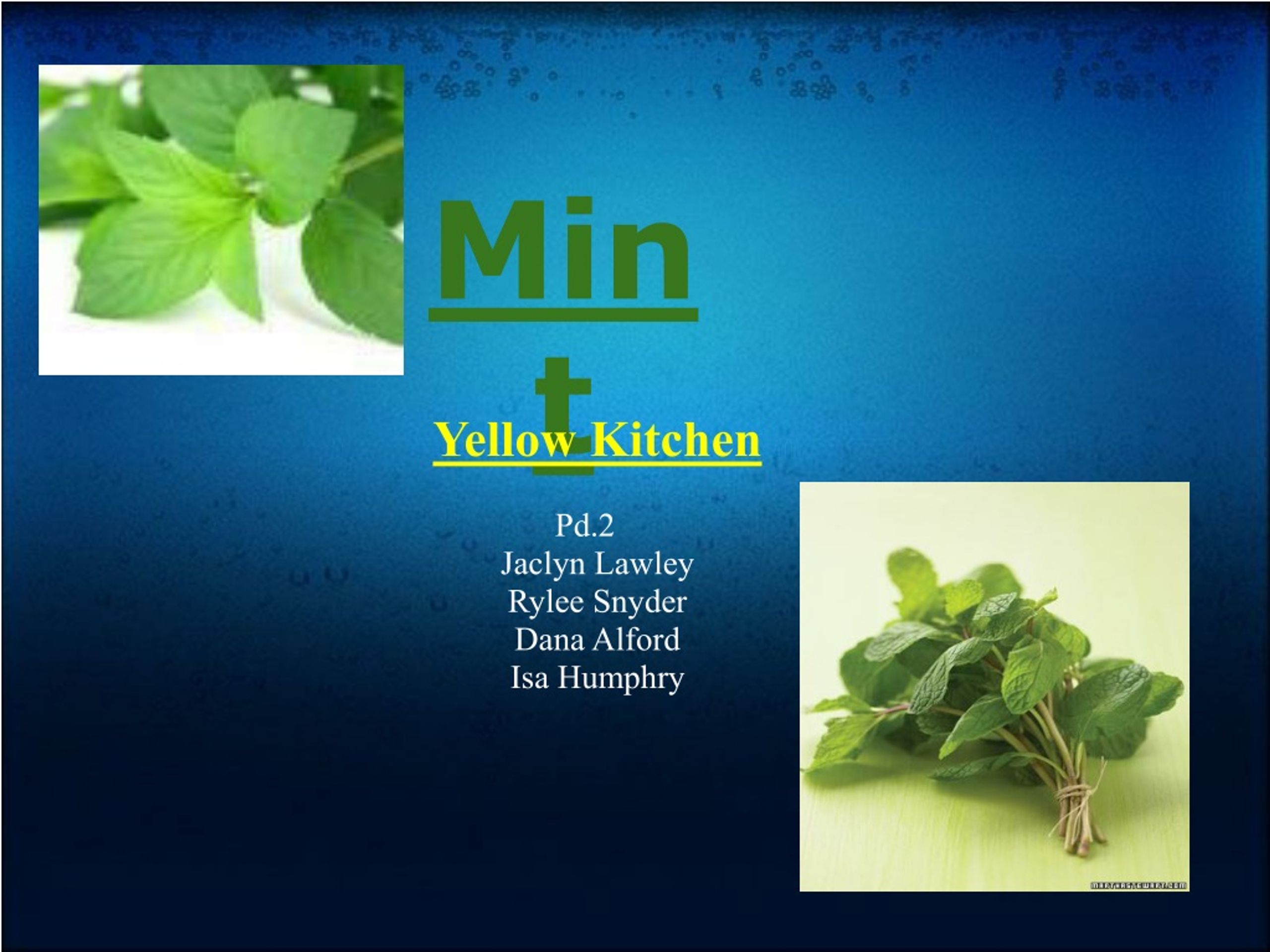
Mint: A Versatile Herb with Culinary and Medicinal Benefits - slide 1
1 / 11

Télécharger la présentation

Mint: A Versatile Herb with Culinary and Medicinal Benefits
Une image / un lien ci-dessous est fourni (tel quel) pour télécharger la présentation

Politique de téléchargement : le contenu du site vous est fourni TEL QUEL pour votre information et votre usage personnel ; il ne peut être vendu, concédé sous licence ni partagé sur d’autres sites sans l’accord de son auteur.Le contenu vous est fourni TEL QUEL, pour votre information et votre usage personnel uniquement. Téléchargez la présentation en cliquant sur ce lien. Lors du téléchargement, si vous ne parvenez pas à télécharger une présentation, l’éditeur a peut-être supprimé le fichier de son serveur.Pendant le téléchargement, si vous ne parvenez pas à obtenir une présentation, le fichier a peut-être été supprimé par l’éditeur.

F I N

Plus de contenu associé

Transcription de la présentation
  1. Mint Yellow Kitchen Pd.2    Jaclyn Lawley Rylee Snyder Dana Alford Isa Humphry

  2. Background Information • Mint is an herb. • It grows as bright green leaves on bushy plants. •  Most varieties of mint come from Europe or Asia, but some are native to North America and Australia. •  Mint's flavor is peculiar, being both sweet and cold.

  3. Etymology • The word mint came from the Latin word "mentha" which originated from the Greek word "minthe." • Greek legend tells how Hades wife was angered with Minthe so she turned her into a plant. Hades took pity on her and gave her a lovely aroma that would sweeten the air when somebody walked on her.

  4. Cultivation of Mint • Mint is a square stemmed perennial with pink or purple flowers. • Mint grows best in partial shade with lots of moisture. •  When planting mint it is best to use just rhizomes that have growth buds instead of seeds. • It does spread through roots so containing the plant is essential. when first planted keep plants in a bright area with a temperature of 50 degrees Fahrenheit or above. • Mint plants like well drained soil with little manure. •  Mint plants have been grown for centuries.

  5. Varieties of Mint • Mint is a Genus of 25 species with over 600 varieties. • These varieties include: Chocolate mint, peppermint, banana mint, lavender mint, pineapple mint, apple mint, orange mint, and standard spearmint.

  6. Culinary Use • Mint is most commonly used fresh, but oils and dried leaves are also used in a variety of dishes. •  Mint is used to add a cooling sensation to dishes and beverages. • Its flavor is used and spread world wide. • Some common dishes and beverages include; Mint Julep,Peppermint Balls, Chocolate Mint Truffles, and Mint Tea.

  7. Medicinal Uses • Peppermint oil has been used to treat indigestion, headaches, colic,gingivitis, irritable bowel syndrome, spasms and rheumatism. • Mint is also used to resolve Bronchitis, colds, and throat infections. • Mint also aids sunburns, wasp stings, and itching. • Mint also helps sooth chest pains and mouth sores. • Mint is a very versatile herb when it comes to medicine.

  8. Risks and Benefits of Mint • Benefits include:  • It relaxes muscles; has antiviral andbactericidal qualities; increases stomach acidity to aid digestion. • Risks include: • Alergic symptoms such as rash and headache. • Throat or airway closure in small children and adults who drink tea with menthol is also a risk.

  9. Other Uses of Mint • Mint can be used as an ant repellent around the house. • Mint can aid concentration by simply sniffing it. • Mint is used in a variety of cosmetics;these include: • Toothpaste  • Mouthwash • Lotions  • Foot scrubs • Bath fizzes • Mint is also a very good fly repellent.  • It is also used i a variety of gum flavors.

  10. Bibliography • http://www.recipes4us.co.uk/Specials%20and%20Holidays/Mint%20Origin%20Uses%20Recipes.htm • http://en.wikipedia.org/wiki/Mentha  • http://www.mountainvalleygrowers.com/mint.htm • http://www.mintrubbing.org/themintplant.pdf • http://www.superbherbs.net/mint.htm  • http://www.best-home-remedies.com/herbal_medicine/herbs/mint.htm

  11. Jobs Distributed Jaclyn-     Health effects and medicinal purposes and varieties of herb. Dana-     Background Information and culinary uses. Rylee-     Etymology and other uses of the Herb. Isa-     Cultivation of the Herb and culinary uses.