Download
1 / 9
90 likes | 218 Vues
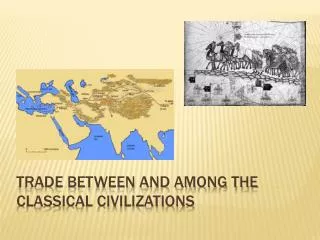
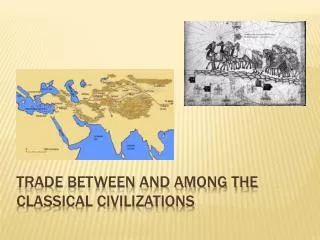
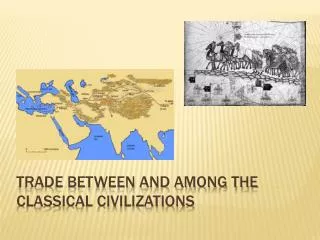
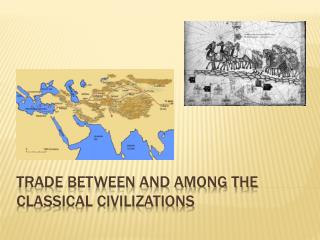
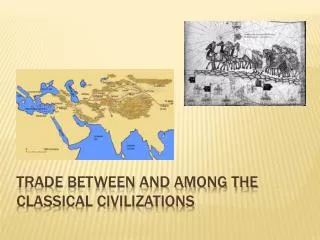
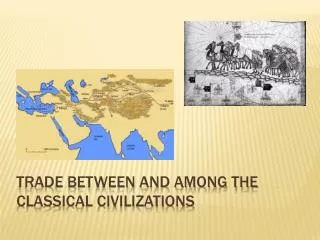
This exploration delves into the intricate trading patterns among classical civilizations, including India, the Mediterranean, and China. It highlights what goods were traded, key trading partners, and the significance of the Silk Roads. Indian trade focused on spices and textiles, while the Mediterranean emphasized wine and olive oil, and Chinese trade featured silk and ceramics. The Silk Roads were crucial for cultural exchanges, including religious pluralism with influences from Buddhism and Christianity. Additionally, maritime trade played a vital role in global commerce, and the exchange of diseases during this period had profound societal impacts. ###

E N D
Describe Indian trading patterns • What was traded? • Who did they trade with? Hei Won and SeongJoon
Describe Mediterranean trading patterns • What did they trade? • Who did they trade with? Young woo and eunji
Describe Chinese trade patterns • What did they trade? • Who did they trade with? Young ha and jung woo
What are the Silk Roads? Where are they located? Why were they important? Ji won and seongpil
Describe Maritime Trade during the Classical Era. • Who was involved? • What was traded? How? Amber and ye seung
Discuss attitudes toward religious pluralism/tolerance on the Silk Roads • Be sure to mention Dunhuang, Christianity, Manichaeism, and Buddhism June you and young eun
How did the Silk Roads facilitate the excahgne of disease during the classical period? Tae hoon and suhyun