Acids and Carbonates
This resource explores how carbonates react with acids, focusing on the practical implications of limescale caused by calcium carbonate. Many households face issues like scummy grey marks under toilets or furred-up kettles due to limescale accumulation. Learn how limescale forms from water passing over limestone or chalk rocks. Discover effective methods for removing limescale using acids, and understand the formation of carbon dioxide gas through chemical reactions. Additionally, find out how to test for carbon dioxide gas in various scenarios.

Acids and Carbonates
E N D
Presentation Transcript
Acids and Carbonates Learning objectives: • How carbonates react with acids • Testing for carbon dioxide Does your toilet have scummy grey marks under the toilet? Is your kettle furred up?
Limescale • It is a problem • It doesn’t look nice. • Its rough so it sticks to things easily. • So therefore bacteria love it! • Limescale is calcium carbonate. • It comes from water that has flowed over limestone or chalk rocks. • Its called calcium carbonate because it is made up of: • Calcium • Carbon • oxygen
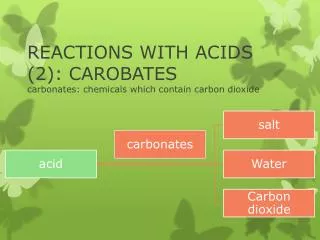
Removing Limescale • You can remove limescale by adding acid to it. • For example, if you have limescale in your kettle you can add acid. • You will see bubbles fizzing. • The bubbles contain carbon dioxide gas. • The acid and the calcium carbonate make a new substance.