Surviving the Heat: Life in Utah's Arid Climate
Utah's extreme climate, reaching up to 136°F with less than 10 inches of annual rain, presents unique challenges for both flora and fauna. Plants like cacti, sagebrush, and yucca have adapted with short and long roots to access scarce water. Animals such as roadrunners, iguanas, and various reptiles utilize strategies like burrowing and nocturnal hunting to cope with the heat. Discover how life thrives in this dry, yet vibrant ecosystem, including hot spots like St. George and Bryce Canyon, where adaptation is key to survival.

Surviving the Heat: Life in Utah's Arid Climate
E N D
Presentation Transcript
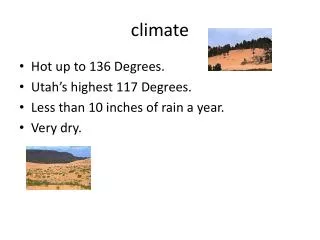
climate • Hot up to 136 Degrees. • Utah’s highest 117 Degrees. • Less than 10 inches of rain a year. • Very dry.
HABITAT • WIND • SHORT ROOTS BECAUSE THEY DO NOT GET MUCH WATEtree • LONG ROOTS –WATER TABLE • LITTLE WATER
Plants Bristles , stores water Cactus , sagebrush, juniper, Joshua tree, yucca
Animals • Roadrunners iguanas snakes scorpions • lizards
Adaptation • Plant • Bristle . • Waterstorage. • Cactus. • Flowers. • Animal • Hard shells. • Burrows to cool off. • Make homes in plants. • Hunt at night.
HOT SPOT • ST. GEORGE • BRYCE CANYON