Challenging Segregation
Explore the pivotal events of the Civil Rights Movement, including the Greensboro sit-ins, which challenged segregation at restaurants and boosted integrated activism. Key groups like the Student Nonviolent Coordinating Committee (SNCC) and the Congress of Racial Equality (CORE) organized significant protests, such as the Freedom Rides, to highlight discrimination in transportation. Tensions escalated with events like Birmingham's violent clashes and the Selma march, known as "Bloody Sunday," ultimately leading to landmark legislation such as the Civil Rights Act of 1964 and the Voting Rights Act of 1965.

Challenging Segregation
E N D
Presentation Transcript
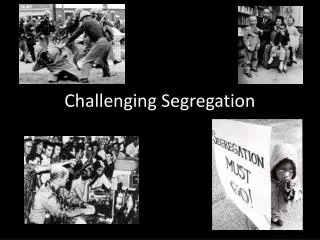
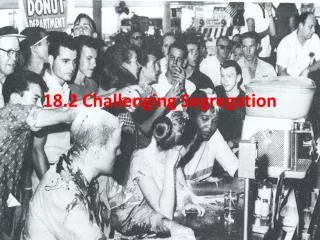
Sit-In Movement • CORE- successfully integrated restaurants by using sit-ins • Jack Spratt Coffee House • Greensboro, NC Jan 31, 1960- Woolworth’s
Student Non-Violent Coordination Committee (SNCC) • Freedom Riders • Organized to draw attention to the South’s refusal to integrate bus terminals • Result- violence
JFK & Civil Rights • Justice Department protects rights • James Meredith: 1st African American student to attend the Univ. of Mississippi
JFK & Civil Rights • Birmingham, AL • Brutal violence used against demonstrators led to Dr. King being jailed and prompted Kennedy to prepare a new civil rights bill
Civil Rights Act 1964 • March on Washington • The Law: • Gave feds more power • Outlawed segregation • Equal Employment Opportunity Commission
Struggle for Voting Rights • Selma March (AL) • March for Freedom • chosen because African Americans were the majority there • State troopers attacked marchers, later known as “Bloody Sunday”
Struggle for Voting Rights • Voting Rights Act 1965 • In registering blacks to vote, this authorized the Attorney General to work side-by-side with local officials