Tropical Rainforest
Discover the fascinating world of tropical rainforests, where temperatures range from 77°F to 82°F and annual rainfall varies from 50 to 260 inches. Despite their lush appearance, these forests possess extremely poor soil quality. Home to a diverse array of species, they feature a layered structure from the forest floor to the canopy and provide essential food sources and medicinal components. Understanding symbiotic relationships like mutualism, commensalism, and parasitism reveals the interconnectedness of life within this vibrant ecosystem.

Tropical Rainforest
E N D
Presentation Transcript
Tropical Rainforest All Y’all will ever want to know about the rainforest
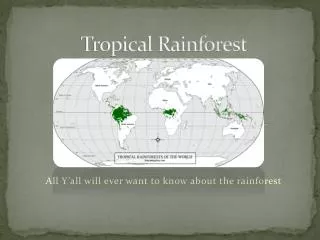
ABIOTIC FEATRURES • Temperature: 77 degrees to 82 degrees • Rainfall: 50 to 260 inches of rainfall yearly • Extremely poor soil quality • Usually on or close proximity to the equator
BIOTIC FEATURES • Layering of the forest, from the floor to the canopy • Is home to the majority of land species • Produces several food sources, and contains components for medicine
Symbiotic Relationships • (Mutualism) Capuchin monkeys lap nectar from flowers in trees as part of their varied diet. In the process they get pollen on their faces and pollinate the flowers. • (Commensalism) Arthropods lay their eggs on the dung of the sloths, which provides food for the growing larvae. • (Parasitism) A parasitic wasp preys on fig wasps, drilling a small hole into the fig and using her long ovipositor to inject an egg near a developing fig wasp larva.