Performance Management Statistics and Facts
Boost Your Teamu2019s Performance Today!<br><br>Struggling to keep your employees engaged and productive? Modern performance management can transform your workplace. By implementing continuous feedback, recognizing achievements, and aligning individual goals with company objectives, you can unlock your teamu2019s full potential.<br><br>u2705 Increase productivity<br>u2705 Reduce turnover<br>u2705 Improve engagement<br><br>Donu2019t wait for annual reviews to make an impactu2014start building a high-performing workforce now.<br><br>ud83dudd17 Discover the latest performance management insights here: https://market.biz/performance-management-statistics/

Performance Management Statistics and Facts
E N D
Presentation Transcript
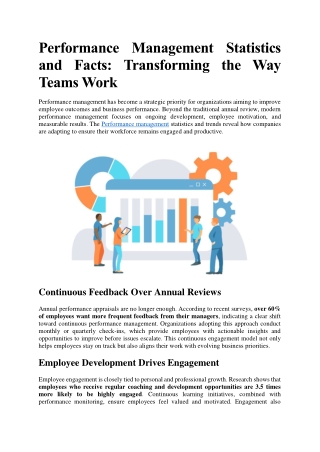
Performance Management Statistics and Facts: Transforming the Way Teams Work Performance management has become a strategic priority for organizations aiming to improve employee outcomes and business performance. Beyond the traditional annual review, modern performance management focuses on ongoing development, employee motivation, and measurable results. The Performance management statistics and trends reveal how companies are adapting to ensure their workforce remains engaged and productive. Continuous Feedback Over Annual Reviews Annual performance appraisals are no longer enough. According to recent surveys, over 60% of employees want more frequent feedback from their managers, indicating a clear shift toward continuous performance management. Organizations adopting this approach conduct monthly or quarterly check-ins, which provide employees with actionable insights and opportunities to improve before issues escalate. This continuous engagement model not only helps employees stay on track but also aligns their work with evolving business priorities. Employee Development Drives Engagement Employee engagement is closely tied to personal and professional growth. Research shows that employees who receive regular coaching and development opportunities are 3.5 times more likely to be highly engaged. Continuous learning initiatives, combined with performance monitoring, ensure employees feel valued and motivated. Engagement also
positively impacts business outcomes, as highly engaged teams are 21% more productive than their less engaged counterparts. Technology is Reshaping Performance Management Digital tools are transforming how organizations approach performance management. Over 60% of companies now rely on performance management software to track goals, monitor achievements, and provide feedback in real time. These platforms allow managers to identify skill gaps, recognize high performers, and implement tailored development plans. Data-driven insights from these tools make performance management more transparent and objective, fostering a fairer workplace environment. The Importance of Managerial Skills Statistics show that more than half of employees feel their managers do not provide clear guidance, highlighting the importance of effective leadership in performance management. Managers trained in providing constructive feedback, goal-setting, and coaching significantly boost employee confidence and performance. A skilled manager can transform underperforming employees into high achievers by setting expectations, recognizing accomplishments, and supporting continuous improvement. Recognition Improves Retention and Morale Recognition remains a critical component of effective performance management. Studies indicate that organizations with structured recognition programs see up to 31% lower turnover rates. Celebrating milestones and achievements reinforces positive behavior, motivates employees, and builds a strong organizational culture. Combining recognition with regular feedback ensures employees feel seen, heard, and appreciated. Linking Performance to Organizational Goals The ultimate goal of performance management is aligning employee efforts with business objectives. Companies that clearly define expectations, track outcomes, and reward results experience significant improvements in overall performance, including higher revenue, improved customer satisfaction, and enhanced team efficiency. Employees who understand how their work contributes to the bigger picture are more engaged and focused. Conclusion Performance management is no longer a simple administrative task—it is a strategic tool that drives engagement, retention, and productivity. By embracing continuous feedback, leveraging technology, empowering managers, and prioritizing recognition, organizations can build motivated, high-performing teams. Staying informed about the latest trends and statistics allows companies to refine their performance management strategies, ensuring both employees and business thrive.




![[Infographic] Female Hair Loss Facts and Statistics](https://cdn4.slideserve.com/7374511/slide1-dt.jpg)