Download
1 / 20
200 likes | 337 Vues
Delve into the rich philosophical traditions of ancient China, exploring the teachings of Confucius, the principles of Legalism, and the wisdom of Daoism. Discover Confucian ideals such as Ren (humaneness) and Xiao (filial piety), and understand the importance of relationships and education over punishment. Learn about Legalism's authoritarian approach, emphasizing strict laws and obedience. Lastly, embrace the natural flow of life through Daoism's principles of Wu Wei and balance between Yin and Yang. Uncover how these philosophies offer solutions to chaos and suffering in life.

E N D
Chinese Philosophies & Ethical Codes
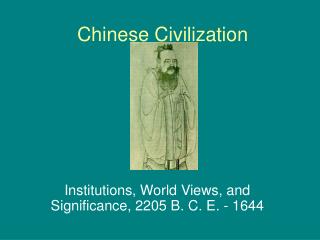
Confucius • Kung Fuzi (Master Kung) • about 500 B.C.E. • Advisor to rulers during Warring States period of China
Confucian Principles Ren --> humaneness, benevolence “Do not do unto others what you would not want others to do unto you.” Xiao --> Filial Piety (Respect your elders!)
4 Principle Relationships 1.Ruler Subject 2. Father Son 3. Husband Wife 4. Elder Younger
Organizing Principles • Status • Age • Gender
The Analects • Most important Confucian book. • Focus on social harmony and the role of rulers and bureaucrats in government. • assumes that “people are basically good.” • If someone does something bad, education, not punishment, is the answer. • Good people will mend their ways if they have a good example to follow (the Emperor!)
Sayings from The Analects: Yoda-isms • Knowing what he knows and knowing what he doesn’t know, is characteristics of the person who knows. • Making a mistake and not correcting it, is making another mistake. • The superior man blames himself; the inferior man blames others. • To go too far is as wrong as to fall short.
Han Fei • 300s B.C.E. • Warring States period. • political philosophy of the Qin Dynasty.
Major Legalist Principles 1. Human nature = selfish. 2. Law = morality 3. Ruler = strong, punishing hand for baddies. Reward good people.
Authoritarian One who favors the principle that individuals should obey a powerful authority rather than exercise individual freedom.
Warring States Period • Tried to escape society and find “the Way of nature.” Lao Tzu
The Dao De Jing • The basic text of Daoism. • In Chinese, it means The Classic in the Way and Its Power. • “Those who speak know nothing: Those who know are silent.”
Major Daoist Principles 1.Dao [Tao] = exactly like “The Force” in Starwars 2. Goal= to become one with the Dao (nature, the universe, etc.) 3.Wu wei = --> “The art of doing nothing.” --> “Go with the flow!” 4. Man is unhappy because he lives w/ man-made laws that are contrary to the ways of nature.
The "Dao" [Tao] The WAY: 1. Reject formal learning. 2. Rely on instinct. 3. Discover the “rhythm” of the universe. 4. Ignore political and social laws.
The Universe of Opposites: Find the Balance! Yin • Masculine • Active • Light • Warmth • Strong • Heaven; Sun • Feminine • Passive • Darkness • Cold • Weak • Earth; Moon Yang
Warring States China: How is a man to live in a world dominated by chaos, suffering, and absurdity?? 3 Solutions: Confucianism--> Moral order by proper relationships Legalism--> harsh law & order. Daoism--> Freedom for individuals avoidance of conformity.