
Understanding Cybersecurity: Key Concepts and Common Threats
This guide covers essential concepts in cybersecurity, including different types of threats like hacking and malware, such as Trojan horses. It explains the importance of authentication methods, including passwords and digital certificates, and highlights the role of biometric devices in security. Additionally, it identifies common cyber threats such as phishing, identity theft, and harassment via the Internet. This comprehensive overview aims to enhance your understanding of cybersecurity essentials and promote safe practices in the digital landscape.

Understanding Cybersecurity: Key Concepts and Common Threats
E N D
Presentation Transcript
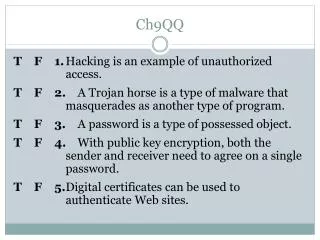
Ch9QQ T F 1. Hacking is an example of unauthorized access. T F 2. A Trojan horse is a type of malware that masquerades as another type of program. T F 3. A password is a type of possessed object. T F 4. With public key encryption, both the sender and receiver need to agree on a single password. T F 5. Digital certificates can be used to authenticate Web sites.
Ch9QQ __ 6. Which of the following is an example of a biometric device? a. password b.firewall c.personal PIN d. smart card reader e.hand geometry reader __ 7. To ensure that an e-mail message or file came from the designated individual and was not tampered with during transmission, you should use which of the following? a. firewall b.digital signature c.antivirus program d.encryption e. surge protector
Ch9QQ a. hacking b. phishing c. identity theft d. cyberstalking e. denial of service attack ___ 8. Where an individual receives threats or harassing behavior via the Internet. ___ 9. When someone impersonates another individual to buy goods or services. ___ 10. When someone sends a spoofed e-mail message in hopes of obtaining personal information that can be used in fraudulent activities.