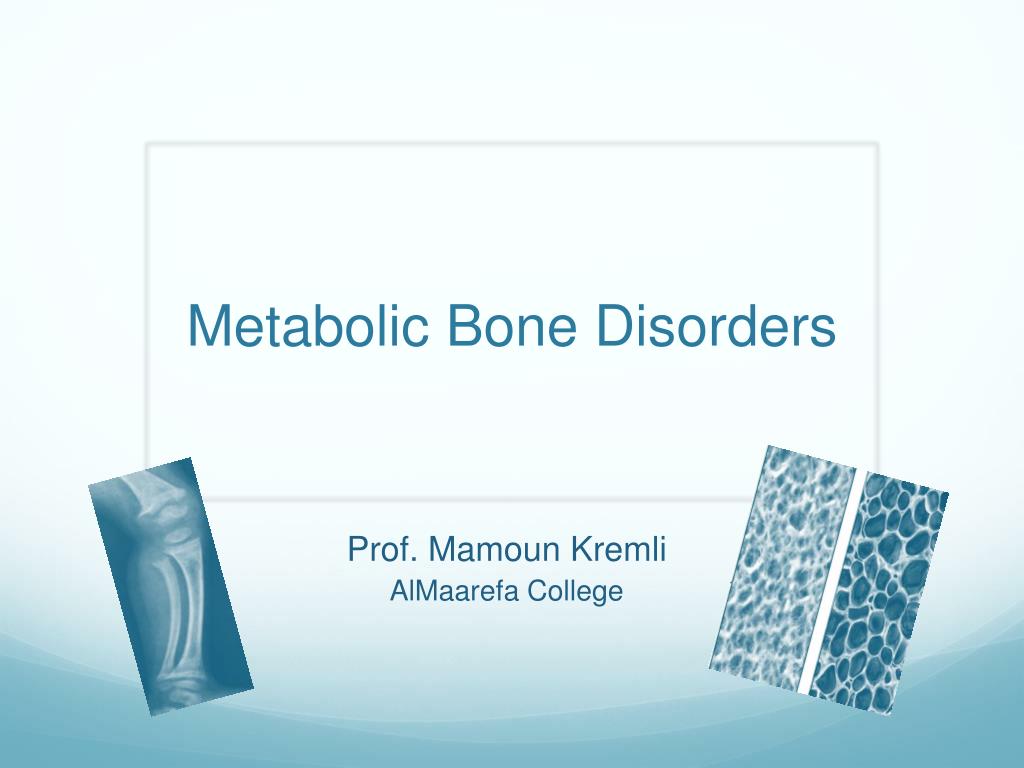
Metabolic Bone Disorders. Prof. Mamoun Kremli AlMaarefa College. Objectives. Bone as an active tissue Calcium is an important mineral Calcium metabolism – normal control Diseases Osteoporosis Rickets and Osteomalacia Hyperparathyroidism Scurvy. Functions of bone tissue. Mechanical:
Une image / un lien ci-dessous est fourni (tel quel) pour télécharger la présentation
Politique de téléchargement : le contenu du site vous est fourni TEL QUEL pour votre information et votre usage personnel ; il ne peut être vendu, concédé sous licence ni partagé sur d’autres sites sans l’accord de son auteur.Le contenu vous est fourni TEL QUEL, pour votre information et votre usage personnel uniquement.Téléchargez la présentation en cliquant sur ce lien.Lors du téléchargement, si vous ne parvenez pas à télécharger une présentation, l’éditeur a peut-être supprimé le fichier de son serveur.Pendant le téléchargement, si vous ne parvenez pas à obtenir une présentation, le fichier a peut-être été supprimé par l’éditeur.
Objectives • Bone as an active tissue • Calcium is an important mineral • Calcium metabolism – normal control • Diseases • Osteoporosis • Rickets and Osteomalacia • Hyperparathyroidism • Scurvy
Functions of bone tissue • Mechanical: • Support & protect soft tissue • Load transmission • Mediate movement • Mineral reservoir • Largest reservoir of Ca++ • Regulation of Ca++
Bone is active • Continuous activity and flow • Structure and composition changing all the time • Regulations by regulating cellular activity: • Osteoclasts & Osteoblasts
Bone growth & remodelling • Growth: • Epiphyseal: • Endochondral ossification • On surface: • Oppositional ossification Miller Review of Orthopaedics
Bone growth & remodeling • In Adults: • Remodeling of existing bone (no growth) • Annually: • 4% of cortical and • 25% of cancellous • “old bone” continuously replaced by “new bone” • Initially: formation slightly exceeds resorption • Later: resorption exceeds formation • Bone mass steadily declines
Age related Bone Changes • Childhood – adolescence: Growth (size & change shape) • Adolescence – 35 (40) years: • Bones get heavier and stronger • Annual bone mass gain: 3% • 35 (40) – 50 years: • Slow loss of bone mass annually: • Men: 0.3% • Women: • 0.5% to menopause, • then 3% for 10 years - (Why?) (↑ osteoclastic activity by ↓ hormones) • 65 years – onwards: • Loss of mass slows gradually to 0.5% (↓osteoblastic activity)
Body Calcium • Most of Calcium in body is present in bone • Release of Calcium from bone is a slow process • Serum calcium is essential for cell function, nerve conduction, and muscle contraction • Normal level: 8.8-10.4 mg/dl (2.2-2.6 mmol/L) • Calcium serum levels have to be controlled quickly • Renal reabsorption • Intestinal absorption
Causes of Calcium absorption • intake of phosphates (as in soft drinks) • intake of oxalates (as in tea and coffee) • Drugs: corticosteroids • Intestinal ma-labsorption syndromes
Players in Ca regulation • Vit. D is the general crude regulator • Target organs: • Small intestines • Bones • PTH is the sensitive fine regulator • Target organs: • Kidneys (v. quick) • Bones (slow) • (indirectly): small intestine
Players in Ca regulation • Cacitonin: C cells of Thyroid • Opposite PTH on bone and kidneys • Good to bone • Oestrogen: • Protects bone from PTH • Good to bone
Players in Ca regulation • Corticosteroids: • Bad to bone • Reduce osteoblastic activity, and increases osteoclastic activity • Reduce calcium absorption from intestine, and increase renal excretion of calcium • Local – BMP (Bone Morphogenic Proteins) • Mechanical stress: • Strengthens bone
Laboratory investigations • X-rays • Bone mineral density (BMD) • DEXA scans: Dual Energy Xray Absorptiometry • Biochemical tests: • Serum Ca, Phosphate • Serum Alkaline Phosphatase • Osteoclastic activity, measures bone turnover rate • Vit. D levels • Urine Ca and Phosphate excretion • Renal profile • Liver function test
Osteoporosis • Reduction of bone mass • Bone minerals and matrix both reduced • Matrix present is normally mineralized • Types: • Generalized: • systemic disease • Localized: • disuse (e.g. in cast) http://drcecilia.ca/
Osteoporosis • More in women • Post menopausal • Oestrogen withdrawal • Increased with: • cigarette smoking • when start menopause with weak bones • In men: • 15 years later • In elderly, may be associated with osteomalacia
Osteoporosis – clinical features • Weak bones: easily fractures: • Vertebral compression fractures • Backache, kyphosis • Colle’s fracture • Neck of femur • Proximal humerus http://library.med.utah.edu Apley’s System of Prthop & Fractures Orthopedic Radiology, A Greenspan. lippincott
Osteoporosis – clinical features • Weak bones: easily fractures: • Vertebral compression fractures • Backache, kyphosis • Colle’s fracture • Neck of femur • Proximal humerus • Loss of cortical thickness • seen on X-rays Orthopedic Radiology, A Greenspan. lippincott
Risk Factors for Postmenopausal Osteoporosis • Caucasian (white) or Asiatic ethnicity • F.H. of osteoporosis • H.O. anorexia nervosa or amenorrhea • Low peak bone mass in third decade • Early onset menopause • Very slim built • Oophorectomy and early hysterectomy • Nutritional deficiency • Chronic lack of exercise
Risk Factors for Postmenopausal Osteoporosis • Caucasian (white) or Asiatic ethnicity • F.H. of osteoporosis • H.O. anorexia nervosa or amenorrhea • Low peak bone mass in third decade • Early onset menopause • Very slim built • Oophorectomy and early hysterectomy • Nutritional deficiency • Chronic lack of exercise
Osteoporosis - Prevention • Good Ca and Vit. D intake • Good physical activity • Exposure to sun • No smoking • No alcohol http://dietitians-online.blogspot.com
Osteoporosis - Prevention • If BMD low: • Hormone replacement therapy (estrogen): • Effective early • For initial five years • Problems: • Dysfunctional uterine bleeding • Risk of uterine and breast cancer – on long use
Osteoporosis - Treatment • Treat the fractures • Maintain good Ca and Vit D intake • May be associated with osteomalacia • Maintain good physical activity • Trying to reduce rate of further bone loss • Hormone replacement therapy • Bisphosphonates
Rickets & Osteomalacia • Same disease: (children / adults) • Inadequate absorption and/or utilization of Ca • Common causes: • Lack of Vit. D • Sever Ca deficiency • Hypophosphatemia • Results in loss of mineralization of bone
Rickets - pathology • Matrix forms, not calcified • In growing physis • Widened physis (epiphyseal growth plate) • Cupping of metaphyseal end (weak new bone) • Irregular metaphyseal end Orthopedic Radiology, A Greenspan. lippincott
Rickets - pathology • Matrix forms, not calcified • In growing physis • Widened physis (epiphyseal growth plate) • Cupping of metaphyseal end (weak new bone) • Irregular metapyseal end • In all bone • Osteopenia, Thin cortex, Deformity • Harrisons sulcus, frontal bossing • In sever cases: hypocalcaemia: • Tetany, convulsions, failure to thrive
Rickets – clinical picture • Enlarged ends of long bones • Wrists, knees • Rickety rosary: • costo-chondral junctions • Harrison’s sulcus • Frontal bossing • Bowing of legs: • Localized – distal tibiae • In sever cases: tetany, convulsions Orthopedic Radiology, A Greenspan. lippincott
Rickets – clinical picture • Enlarged ends of long bones • Wrists, knees • Rickety rosary: • costo-chondral junctions • Harrisons sulcus • Frontal bossing • Bowing of legs: • Localized – distal tibiae • In sever cases: tetany, convulsions http://www.magazine.ayurvediccure.com/ www.thachers.org
Rickets – clinical picture • Enlarged ends of long bones • Wrists, knees • Rickety rosary: • costo-chondral junctions • Harrisons sulcus • Frontal bossing • Bowing of legs: • Localized – distal tibiae • In sever cases: tetany, convulsions www.thachers.org
Rickets – clinical picture • Enlarged ends of long bones • Wrists, knees • Rickety rosary: • costo-chondral junctions • Harrisons sulcus • Frontal bossing • Bowing of legs: • Localized – distal tibiae • In sever cases: tetany, convulsions www.thachers.org
Rickets – clinical picture • Enlarged ends of long bones • Wrists, knees • Rickety rosary: • costo-chondral junctions • Harrisons sulcus • Frontal bossing • Bowing of legs: • Localized – distal tibiae • In sever cases: tetany, convulsions
Rickets – clinical picture • Enlarged ends of long bones • Wrists, knees • Rickety rosary: • costo-chondral junctions • Harrisons sulcus • Frontal bossing • Bowing of legs: • Localized – distal tibiae • In sever cases: tetany, convulsions N Engl J Med 2009
Rickets – X-rays • Widened physis(epiphyseal growth plate) • metaphyseal end of physis • Cupping of (weak new bone) • Irregular • Deformed bones Orthopedic Radiology, A Greenspan. lippincott
Rickets – lab results • Serum Ca: • slightly low /or normal • Serum Phsphate: • slightly low /or normal • Alk Phosphatase: • High – a lot of bone turnover • Vit. D level: • low • PTH level: • Increased – scondary effect – to keep s. Ca level • Urinary Ca: V. low
Rickets - treatment • Vit. D and Calcium • Most deformities correct gradually • Sever deformities might need surgical correction
Hopophsphataemic rickets • Vit. D resistant rickets • Familial, X-linked • Impaired renal tubular reabsorption of phosphate • Lab. Results: • Serum Phosphate: low • Urinary phosphate: high • Treatment: • High dose Vit. D • Phosphate
Connexion au compte
Connectez-vous pour publier votre contenu sur SlideServe.